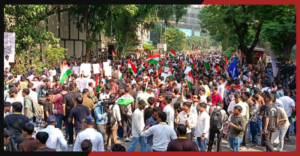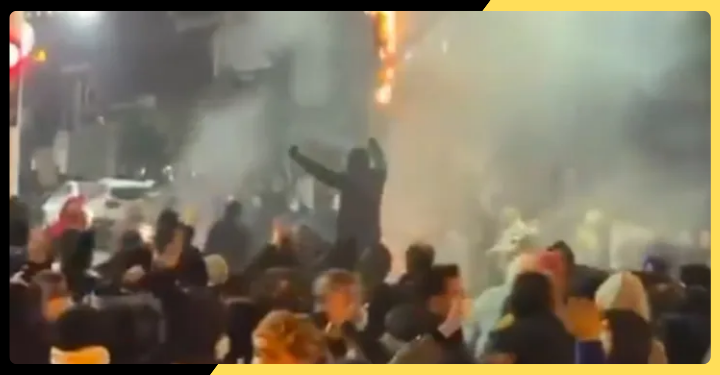
Street protests have intensified across several Iranian cities as authorities impose widespread internet restrictions, cutting millions of people off from digital communication and fueling public frustration. Demonstrations, initially sparked by long-standing economic grievances and social restrictions, have grown broader in scope, with protesters now openly criticizing governance, rising living costs, and limits on civil liberties. The internet blackout, widely seen as an attempt to curb organization and information-sharing, has instead become a rallying point for anger on the streets.
Witnesses and activists say gatherings have taken place in urban centers and provincial towns alike, often forming spontaneously despite heavy security presence. Protesters have been heard chanting slogans demanding accountability and reform, while others have focused on the immediate hardship caused by the communications shutdown. For many Iranians, access to the internet is not only a social lifeline but also an economic necessity, especially for small businesses, freelancers, and students who rely on online platforms for work and education.
The government has defended the restrictions as necessary to maintain public order and prevent what it describes as the spread of misinformation and foreign interference. State media has echoed official statements, portraying the protests as limited in size and influenced by external actors. Yet videos and reports shared before and during intermittent connectivity windows suggest a wider and more sustained movement, with demonstrators returning to the streets night after night.
The blackout has been uneven, with mobile data networks often disabled while some fixed broadband connections remain partially functional. This fragmented approach has made communication unpredictable, further heightening anxiety among families trying to reach loved ones. Many Iranians report relying on virtual private networks (VPNs) when possible, though these tools themselves are frequently blocked or slowed, making reliable access difficult.
Economists warn that prolonged internet disruptions carry significant costs. Iran’s already strained economy, affected by inflation and limited international trade, depends increasingly on digital services. Online marketplaces, ride-hailing apps, and remote work opportunities have become critical income sources for many households. Each day of restricted connectivity compounds financial losses and deepens public resentment, particularly among younger Iranians who see digital access as essential to their future prospects.
Security forces have maintained a visible presence in protest areas, using checkpoints, patrols, and crowd-control measures to deter large gatherings. Human rights groups abroad have raised concerns about arrests and the treatment of detainees, though precise numbers are difficult to verify due to the information blackout. Lawyers and activists inside the country say the lack of internet access complicates efforts to document incidents or provide legal assistance, leaving many families in the dark about the fate of detained relatives.
Despite these challenges, protesters have adapted. Word of mouth, handwritten flyers, and pre-arranged meeting points have replaced social media coordination in some areas. In others, brief restorations of connectivity are used to quickly share updates before networks go dark again. This cat-and-mouse dynamic underscores the limits of digital shutdowns in suppressing dissent, especially when underlying grievances remain unresolved.
The current unrest reflects deeper tensions within Iranian society. Years of economic pressure, high unemployment, and perceived social restrictions have eroded public trust in institutions. Younger generations, in particular, have grown increasingly vocal about their desire for change, drawing inspiration from global movements while grappling with local realities. The internet, in this context, is more than a tool—it symbolizes connection to the outside world and the possibility of alternative futures.
Officials have signaled that restrictions may be eased once what they describe as “stability” is restored, but few specifics have been offered. Previous episodes of unrest suggest that connectivity may return gradually, often without clear acknowledgment of the shutdown’s impact. Critics argue that such measures address symptoms rather than causes, postponing rather than preventing future unrest.
International reactions have been cautious but attentive. Some foreign governments and organizations have called for restraint and emphasized the importance of allowing free flow of information. Others have highlighted the humanitarian implications of internet shutdowns, noting their effects on access to emergency services, healthcare coordination, and independent journalism. Iranian officials, however, maintain that national sovereignty and security concerns justify their actions.
As night falls in cities across Iran, the pattern has become familiar: quieter streets during the day, followed by renewed gatherings after dark. The absence of reliable internet has not silenced discontent; instead, it has shifted its expression back to physical spaces—streets, squares, and neighborhoods. For many protesters, being seen and heard in person has taken on renewed urgency in a moment when digital voices are muted.
Whether the demonstrations will lead to tangible change remains uncertain. What is clear is that the combination of street protests and an internet blackout has exposed the depth of public frustration and the challenges facing authorities in managing dissent. As long as economic hardship, social demands, and restricted freedoms persist, the streets are likely to remain a focal point of expression—online or offline.
Journalist Details