


In a case that shocked the academic and legal communities alike, the Chennai Mahila Court has sentenced A. Gnanasekaran, the lone accused in the Anna University sexual assault case, to life imprisonment with a mandatory 30-year minimum term before parole. This rare and decisive sentence, handed down on June 2, 2025, marks a pivotal moment in Tamil Nadu’s legal response to gender-based violence, especially within educational environments.
The Assault That Sparked Outrage
The brutal assault occurred on December 23, 2024, when a 19-year-old engineering student at Anna University was lured and sexually assaulted by Gnanasekaran, a 37-year-old local food vendor known to frequent the campus perimeter. The young woman was reportedly threatened and filmed during the assault, with the accused attempting to blackmail her afterward.
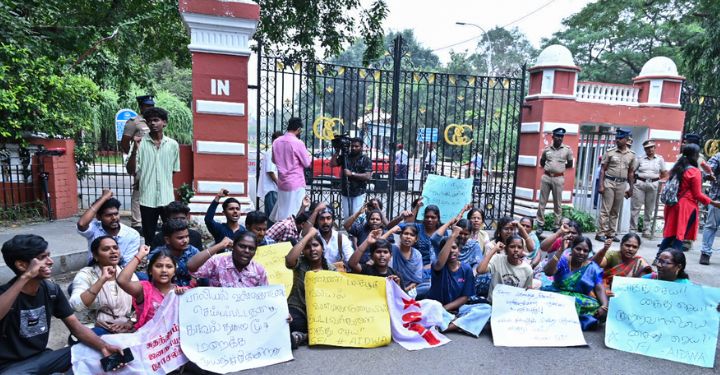
The victim managed to come forward, and her testimony, supported by medical reports, digital evidence, and CCTV footage, led to swift legal intervention. The incident ignited widespread anger across Tamil Nadu, with student protests, political condemnation, and a flurry of demands for justice.
A High-Profile Case and Swift Judicial Action
Following public outcry, the Madras High Court stepped in, ordering the creation of a Special Investigation Team (SIT) to take over the case. The SIT worked under judicial monitoring and filed a detailed charge sheet within 60 days. It included charges of rape, intimidation, criminal trespass, and under sections of the Information Technology Act for unlawful video recording.
The trial, which began in early 2025, proceeded on a fast-track basis. Over 30 witnesses were examined, including forensic experts, police officers, and the victim herself, who bravely gave her testimony in a closed courtroom. Despite attempts by the defense to downplay the extent of the assault and argue that Gnanasekaran had no prior convictions, the prosecution produced strong evidence of his repeated criminal behavior and predatory conduct.
Court’s Verdict and Legal Significance
The Mahila Court found Gnanasekaran guilty of 11 separate offenses. In her judgment, Judge V. Bharathi declared that the accused had shown “no remorse” and had “exploited the vulnerability of a young woman within a supposed safe zone.”
Citing precedents from the Supreme Court, the judge imposed a life sentence with a condition that Gnanasekaran must spend a minimum of 30 years behind bars without eligibility for parole. “This is not merely a punishment. It is a message — that society will no longer tolerate the normalization of sexual violence, particularly in institutions of learning,” the court observed.
Legal scholars have noted that while life imprisonment is a standard punishment in such cases, a fixed minimum term of 30 years before parole is extremely rare. This condition underscores the court’s acknowledgment of the psychological and societal damage inflicted by the crime.
A Victim’s Fight for Justice
The survivor, a first-year student at Anna University, has received ongoing counseling and protection from the Tamil Nadu government. In an emotional statement issued through her legal team, she expressed relief at the court’s decision but emphasized that the trauma of what she endured would “stay with her forever.”
The Tamil Nadu State Legal Services Authority has awarded her ₹25 lakh in compensation, as directed by the Madras High Court. She has also been assured educational continuity and safety measures to resume her studies.
Political Fallout and Public Debate
The crime and the subsequent investigation became a lightning rod for political controversy. The opposition alleged that the state government attempted to shield the accused due to his alleged links to local political figures. In the days following the assault, questions were raised about how Gnanasekaran — a repeat offender — was able to operate so freely near a major educational institution.
Chief Minister M.K. Stalin defended the government’s response, saying that the SIT’s swift probe and the judiciary’s prompt action reflected the administration’s commitment to women’s safety. “The verdict is a testament to what can happen when law enforcement and the judiciary work together without interference,” Stalin said in a post-verdict address.
Opposition leaders, however, have continued to push for an inquiry into lapses by the local police, who they allege failed to act on prior complaints against Gnanasekaran.
Impact on Campus Safety and Legal Reform
In the wake of the incident, Anna University has begun overhauling its campus security protocols. Measures include restricting public access during certain hours, installing additional CCTV cameras, and launching a gender sensitization program for students and staff.
Moreover, the case has triggered broader calls for legal reform. Women’s rights organizations are now advocating for stricter background checks for vendors and service providers operating near campuses. Some are also pushing for the creation of sexual violence response units in universities with powers akin to those of Internal Complaints Committees under the POSH Act.
Legal analysts believe that the 30-year minimum term sentence could become a new benchmark for aggravated sexual assault cases involving repeat offenders. “This sets a precedent. Courts are now clearly stating that rape isn’t just a criminal act — it’s an assault on the soul of a civil society,” said retired High Court judge K. Krishnan.
The Road Ahead
While the verdict brings some measure of closure, activists and legal experts agree that the broader fight is far from over. Cases like this highlight how easily predators can exploit systemic gaps in safety, surveillance, and justice delivery.
For the survivor, this chapter — while painful — has also made her a symbol of resilience. Her courage in testifying and staying the course is now being lauded as a turning point for Tamil Nadu’s efforts to ensure safer campuses.
The ruling serves as a stark reminder: when the system acts decisively and with empathy, justice is not only possible — it is inevitable.