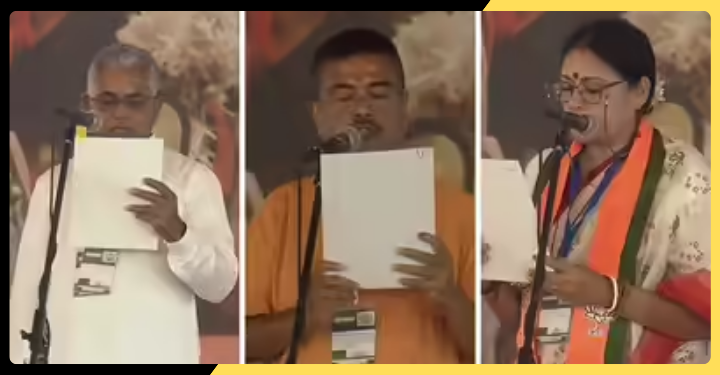
The first BJP government in West Bengal has unveiled a cabinet that reflects careful political calculations around caste, region and leadership experience. Chief Minister Suvendu Adhikari has chosen ministers who collectively represent key social and electoral groups across the state.
Senior BJP figure Dilip Ghosh remains one of the most influential names in the cabinet. Known for his aggressive campaigning style and organisational discipline, Ghosh helped BJP build a robust network in Bengal over the past decade.
Another important face is Agnimitra Paul, whose induction brings gender representation into the ministry. Paul has consistently remained visible in state politics and emerged as one of the BJP’s most articulate Bengali-speaking leaders.
The cabinet also includes representation from communities that played a major role in BJP’s electoral victory. Ashok Kirtania represents the Matua community, while Nisith Pramanik strengthens north Bengal representation. Tribal outreach comes through Kshudiram Tudu.
Political analysts believe the BJP is trying to ensure that no major social group feels excluded from the power structure. The ministry reflects the party’s broader strategy of combining identity politics with governance messaging.
The swearing-in ceremony at Brigade Parade Ground carried both symbolic and strategic significance. The BJP used the occasion to showcase unity, strength and national backing through the presence of Prime Minister Narendra Modi and other NDA leaders.
The current cabinet is only the beginning. Reports indicate that the ministry may be expanded later to include more regional and organisational leaders.
For Bengal, the new cabinet represents a major departure from the political culture that dominated the state for over a decade. Whether BJP can convert electoral success into administrative stability will now become the central political question in West Bengal.
Journalist Details