


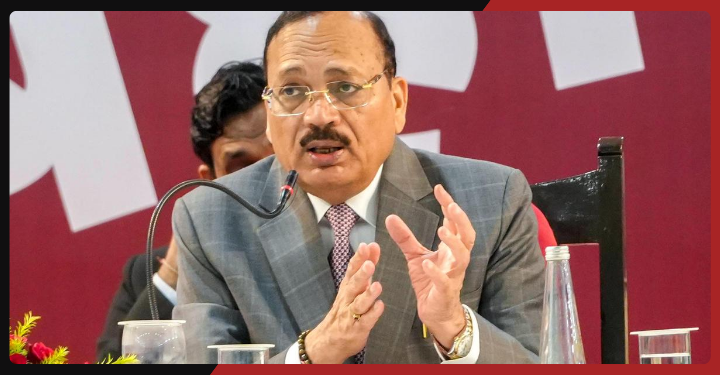
Chief Justice of India Surya Kant has declined a meeting request from opposition leaders Rahul Gandhi and Mallikarjun Kharge, with judicial propriety emerging as a central consideration in the reported decision. The leaders had sought an opportunity to submit a memorandum concerning alleged electoral irregularities, the Special Intensive Revision (SIR) of electoral rolls, and the functioning of the Election Commission of India.
The request came at a time when opposition parties were preparing a political march towards the Supreme Court in New Delhi. The proposed demonstration was intended to draw attention to allegations of electoral malpractice and concerns about the treatment of protesters during recent demonstrations. The INDIA bloc wanted the issues brought to the attention of the country’s highest judicial authority.
According to media reports, the Chief Justice’s decision was linked to the fact that related matters were already before the Supreme Court. The distinction between judicial proceedings and administrative interactions is important in this context. The court considers legal questions through established procedures, including petitions, hearings, evidence, and arguments presented by the parties concerned.
The opposition leaders’ proposed meeting was not the same as a formal hearing. A memorandum submitted during an informal meeting cannot automatically replace the procedures required for seeking judicial relief. Questions concerning electoral rolls, constitutional rights, or alleged violations of law must be considered through appropriate legal channels.
Judicial propriety also concerns the need to preserve impartiality. The Chief Justice and other judges must avoid situations that could create an impression that political representatives receive special access to influence judicial decisions. This principle is particularly significant when the subject of a proposed discussion overlaps with cases that may be pending before the court.
The reported refusal should not be interpreted as a judicial determination that the opposition’s allegations are either true or false. Declining a meeting does not resolve the underlying questions about electoral administration, voter registration, or the conduct of public authorities. Those questions require examination under the relevant legal framework.
The opposition’s demands include action concerning Chief Election Commissioner Gyanesh Kumar, a halt to the SIR exercise, and changes to the use of electronic voting machines. These are politically significant demands, but any legal remedy would depend on the powers of the relevant institutions and the arguments presented through lawful procedures.
The Supreme Court’s role is to adjudicate disputes according to the Constitution and applicable law. It does not function as a forum in which political parties can obtain administrative directions merely by requesting an audience with the Chief Justice. This distinction helps explain why a formal petition may be the appropriate route when a party seeks enforceable relief.
The development also places responsibility on political parties to communicate their concerns clearly and use available legal remedies. Opposition leaders can continue to question government decisions, raise public concerns, and pursue litigation where legally justified.
For citizens, the larger question is whether complaints involving electoral processes receive fair consideration through transparent and effective mechanisms. The Chief Justice’s reported decision addresses the proposed meeting, not the final merits of those complaints. The next steps in any legal challenge will therefore be more significant in determining how the underlying issues are addressed.