


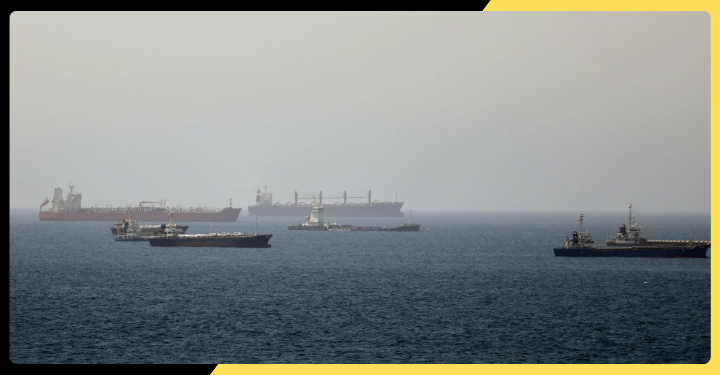
Crude oil prices that initially jumped on news linked to evacuation planning and heightened alert levels around the Strait of Hormuz later reversed course as traders reassessed the actual risk to global supply chains. What began as a sharp geopolitical-driven rally gradually lost strength once it became clear that shipping activity through the region had not been materially disrupted.
In the early hours of trading, crude benchmarks such as Brent and West Texas Intermediate surged on speculation that maritime tensions could escalate into a partial or full disruption of tanker movements. The Strait of Hormuz is one of the most strategically important oil transit routes in the world, linking major producers in the Middle East with key consumer markets in Asia, Europe, and North America. Even minor uncertainty in this corridor tends to generate outsized reactions in oil futures markets.
However, as additional maritime intelligence and shipping updates emerged, it became evident that the situation was more precautionary than operationally restrictive. Tanker traffic continued to move, albeit with increased security awareness and minor rerouting in some cases. This helped calm investor sentiment, leading to a gradual unwinding of risk premiums that had been added during the initial spike.
Market participants also noted that the absence of confirmed infrastructure damage or formal shipping restrictions played a key role in easing prices. Historically, oil rallies driven purely by geopolitical headlines tend to fade quickly unless they are reinforced by physical supply interruptions. In this case, the lack of tangible disruption reduced the justification for sustained higher prices, prompting traders to lock in profits.
Speculative positions built during the early surge began to unwind as momentum shifted. Hedge funds and short-term traders, who had amplified the initial rally, started exiting positions once volatility peaked. This contributed to a steady downward pressure on prices, even as underlying demand fundamentals remained unchanged.
At the same time, broader macroeconomic conditions also influenced the retreat in crude prices. Global demand signals remained mixed, with some regions showing stable consumption while others faced slower industrial activity. This limited the market’s ability to sustain a risk premium purely on geopolitical concerns.
Energy analysts highlighted that the oil market is increasingly sensitive to rapid information cycles. Social media updates, news alerts, and algorithm-driven trading systems can accelerate both upward and downward movements within short timeframes. The Strait of Hormuz episode once again demonstrated how quickly sentiment can shift when initial reports are either clarified or partially corrected.
Insurance and freight markets also reflected the easing tension. While shipping costs briefly increased due to perceived risk, they stabilized as no escalation materialized. This helped further reduce pressure on oil prices, since transportation costs are a key component of overall energy pricing structures.
Despite the decline, traders remain alert to any renewed developments in the region. The Strait of Hormuz continues to be a focal point for geopolitical risk assessment in energy markets. Even in periods of calm, it carries a persistent risk premium due to its strategic importance and history of regional tensions.
In conclusion, the retreat in crude oil prices highlights the market’s tendency to reprice risk rapidly once uncertainty is clarified. While the initial surge reflected genuine concern over potential disruptions, the subsequent easing shows that without confirmed supply shocks, geopolitical-driven rallies often prove temporary.