


Delhi’s construction sector will face significant restrictions this winter as authorities move to control dust and other emissions ahead of the city’s most challenging pollution months.
Under the announced winter pollution framework, dust-generating demolition work and outdoor civil construction activities will be prohibited from November 1, 2026, to January 31, 2027. The restrictions will become stricter during the peak winter period, with a complete ban on construction and demolition scheduled from December 10 to January 20.
The government has included exemptions for essential public infrastructure and urgent government or emergency works. This means that not every project will necessarily stop under the framework, but ordinary dust-generating construction and demolition activities will face significant limitations.
Construction dust has been a recurring focus of Delhi’s pollution-control measures. The new framework seeks to establish restrictions in advance during the winter months rather than waiting for air quality to deteriorate before imposing additional controls.
The construction restrictions are part of a broader pollution strategy announced by the Delhi government following a high-level meeting involving Union Environment Minister Bhupender Yadav, Chief Minister Rekha Gupta and senior Delhi officials. The meeting reviewed pollution sources and preparations for the winter season.
The government has also addressed the transportation of construction material. Vehicles carrying items such as sand, stone, bricks, cement and debris will face restrictions on entering Delhi during the relevant periods, subject to exemptions for projects of national importance, essential public infrastructure and emergency works.
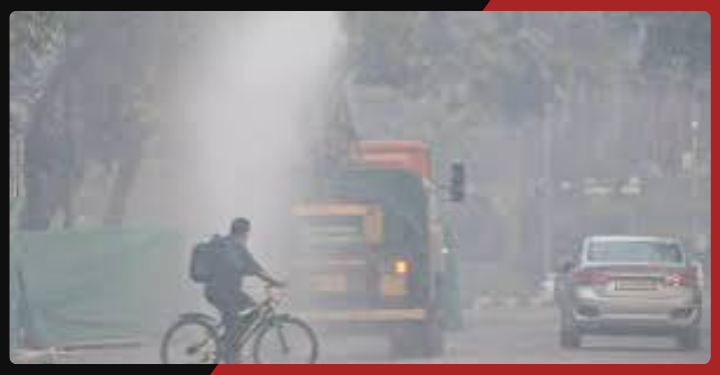
Large commercial buildings and major construction sites will also be required to use anti-smog guns or mist systems in circumstances covered by the framework. These systems are intended to help control dust generated during construction-related operations.
The administration is simultaneously asking institutions, housing societies, resident welfare associations and other establishments to prevent the burning of waste, leaves, biomass and plastic. Such measures are intended to address local sources of particulate pollution that can add to poor winter air quality.
The construction restrictions will operate alongside other measures designed to reduce traffic and vehicle emissions. Parking charges at authorised facilities will be doubled from November 1 to February 28, while 50% of employees in government and private offices will work from home during the winter period.
Delhi will also restrict entry of certain non-Delhi vehicles. From November 1 to January 31, vehicles registered outside Delhi that do not meet BS-VI emission standards will be prohibited from entering the city, with exemptions for categories including CNG and electric vehicles and emergency services.
The government has described pollution control as a year-round responsibility, but the winter framework establishes a specific set of mandatory measures between November and February.
The construction restrictions are therefore only one component of a wider strategy involving transport, workplaces, parking, fuel enforcement and dust control. The measures are intended to reduce multiple sources of emissions during the period when Delhi’s air quality is expected to face greater seasonal pressure.