


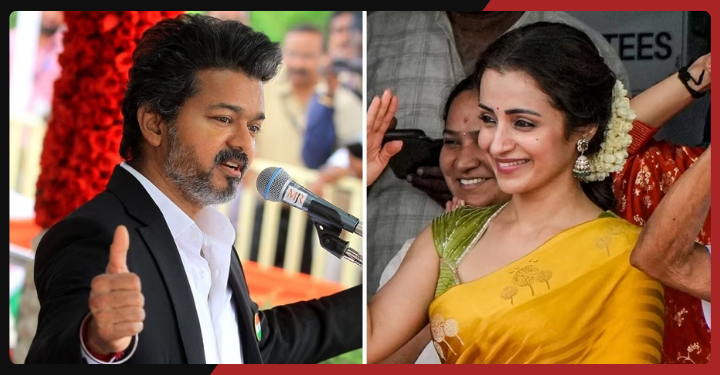
A controversy involving actor Trisha Krishnan has now developed into a wider political debate in Tamil Nadu, with Chief Minister C. Joseph Vijay using the state Assembly to strongly condemn derogatory and double-meaning remarks against women.
Vijay’s intervention has attracted major attention because it represents his strongest public response yet to the political storm that followed controversial comments allegedly linked to Trisha. The Chief Minister did not directly name Opposition leader Udhayanidhi Stalin during his Assembly address, but his remarks came against the backdrop of the ongoing dispute between the ruling TVK and the opposition DMK.
The controversy began during a Cauvery-related protest in Thanjavur in August. While Udhayanidhi Stalin was addressing the gathering, supporters reportedly began chanting Trisha’s name. A subsequent remark made by the opposition leader was interpreted by critics as a double entendre or inappropriate reference to the actor.
The clip circulated widely and triggered strong reactions on social media and in political circles. Leaders from Vijay’s Tamilaga Vettri Kazhagam criticised the alleged remark, calling it inappropriate and unacceptable.
However, Udhayanidhi Stalin rejected accusations that he had made an improper comment about Trisha. He argued that his remarks had only one meaning and were connected to the Cauvery issue and the concerns surrounding farmers.
The disagreement over interpretation soon became a major political flashpoint.
Vijay eventually addressed the larger issue in the Tamil Nadu Assembly, focusing on the responsibility that comes with freedom of speech. He said political criticism was acceptable and that leaders could challenge and question each other. But he made it clear that politics should not become a platform for humiliating women or launching personal attacks.
The Chief Minister described the present atmosphere as one in which vulgarity and hatred appeared to be increasingly entering public discourse. He criticised the use of double-meaning language and defamatory remarks against women.
His comments were significant because Vijay did not limit the issue to the controversy involving one actor or one opposition leader. Instead, he turned the debate into a broader discussion about political culture.
Vijay argued that public representatives must recognise the impact of their words. Politicians speak before large audiences, their statements are broadcast across television and social media, and controversial comments can influence the tone of public discussion.
He also reminded political leaders that respect for women should not depend on party affiliation or political rivalry.
The Trisha controversy has therefore become symbolic of a larger question: how far can political criticism go before it becomes personal abuse?
For Vijay, the answer appears clear. Criticise policies, challenge governments and question political decisions—but do not degrade individuals, particularly women, in the process.
His speech has also strengthened the political confrontation between TVK and DMK. Since Vijay’s entry into electoral politics and his rise to the chief minister’s position, Tamil Nadu has witnessed a significant restructuring of its political landscape.
The latest controversy has provided both sides with another opportunity to attack each other.
While TVK leaders have portrayed Vijay’s comments as a defence of women’s dignity, opposition voices have questioned the political handling of the controversy and rejected allegations surrounding Udhayanidhi Stalin’s original statement.
Regardless of the political arguments, the issue has generated an important conversation about language and accountability.
Vijay’s Assembly speech suggests that his government wants to establish a clear distinction between legitimate political criticism and personal humiliation.
As the controversy continues to generate reactions, one thing is certain: the Trisha row is no longer only about a viral clip. It has become part of a much larger debate about respect, speech and the changing nature of Tamil Nadu politics.