


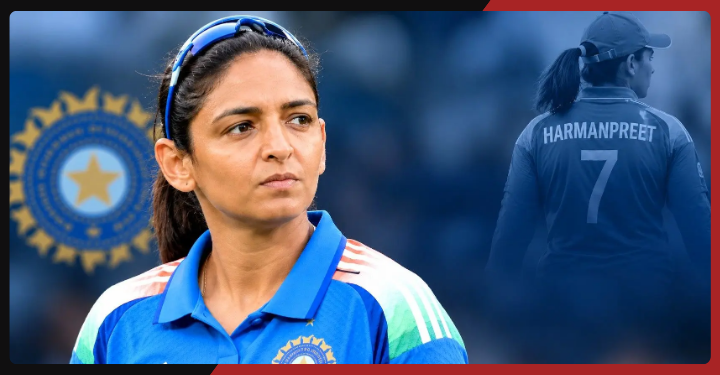
Harmanpreet Kaur’s decision to step down as captain of the Indian women’s cricket team across all formats has brought an important chapter of Indian cricket to a close. The 37-year-old announced her decision on October 6, 2026, following a Board of Control for Cricket in India (BCCI) review meeting in Guwahati. While she has relinquished the leadership role, Harmanpreet has made it clear that her journey as an India player will continue.
Her departure from the captaincy comes after a remarkable leadership career that lasted for a decade in T20 cricket and expanded across all formats. Harmanpreet first took charge of India’s T20I team in 2016. Following Mithali Raj’s retirement, she became the full-time ODI and Test captain in 2022 and subsequently became India’s all-format leader.
Few moments defined her tenure more dramatically than India’s historic victory in the 2025 Women’s ODI World Cup. Under Harmanpreet’s leadership, India won their maiden ODI World Cup, giving the team one of the biggest achievements in its history. The triumph also placed Harmanpreet among the most successful captains in Indian cricket.
Her leadership journey, however, was about much more than one tournament. During her tenure, Indian women’s cricket continued to establish itself as a major force in international cricket. The team experienced victories, disappointments, difficult transitions and the emergence of a new generation of players.
Harmanpreet reflected on that journey in an emotional statement announcing her decision. She said captaincy had involved years of memories, emotions and sacrifices. She also acknowledged that there were occasions when she had placed her own game and personal ambitions behind what she believed was best for the team.
The timing of her announcement is particularly significant because it came immediately after the BCCI conducted a review meeting of the women’s team in Guwahati. BCCI secretary Devajit Saikia chaired the meeting, which was attended by Harmanpreet, vice-captain Smriti Mandhana and head coach Amol Muzumdar. The discussions focused on the team’s recent trajectory and its future direction.
Harmanpreet’s statement suggested that her decision was not simply about leaving a position. It was also about moving into a different phase of her career. After years of carrying the responsibilities of captaincy, she now wants to concentrate on playing the sport without the additional pressure associated with leadership.
That distinction is important. Harmanpreet has not announced her retirement from international cricket. Instead, she intends to continue representing India as a player. Her experience could therefore remain extremely valuable to the team, particularly for younger players who have grown up watching her lead the side.
Her decision also creates an obvious leadership question for Indian cricket. Smriti Mandhana is widely viewed as a leading candidate for the captaincy, although the formal appointment will be made by the BCCI. The transition could give the team a fresh leadership structure while allowing experienced players such as Harmanpreet to contribute without carrying the full burden of captaincy.
For Harmanpreet, the end of captaincy comes at a point when she can look back on a career filled with historic moments. She has been part of the transformation of women’s cricket in India, from a sport fighting for wider recognition to one with enormous public interest and growing professional opportunities.
She has also experienced the difficult side of leadership. Captaincy brings constant scrutiny, and every selection, tactical decision and match result can attract criticism. Harmanpreet acknowledged that some decisions were difficult and were not always understood by everyone. Nevertheless, she maintained that her intention was always to make the team stronger and create opportunities for other players.
Her farewell message carried a tone of acceptance rather than disappointment. Harmanpreet said she believed the team was in a good place, with talent, character, belief and a promising future. She expressed excitement about remaining part of that future, even though she would no longer be the captain.
The change therefore represents both an ending and a beginning. Indian women’s cricket is entering a new leadership era, while Harmanpreet herself gets an opportunity to rediscover the game from a different perspective.
For supporters who have watched her lead India through some of its greatest highs and toughest moments, the announcement will inevitably feel emotional. Yet Harmanpreet’s own message was clear: the captaincy has ended, but the cricket journey has not.
Her next chapter will be about playing for the game, contributing through experience and helping India’s next generation build upon the success achieved during her leadership. After years of carrying the responsibility of captaincy, Harmanpreet Kaur is now preparing to take the field simply as a cricketer — but her influence on Indian women’s cricket is unlikely to disappear anytime soon.