


A Houthi-linked drone was intercepted and destroyed south of Mecca by Saudi air-defence forces, according to Saudi Arabia’s military coalition, in an incident that has triggered heightened security concerns around Islam’s holiest city.
The Saudi-led coalition said the drone was detected and intercepted on Tuesday evening, September 15. Coalition spokesman Major General Turki al-Malki said the Royal Saudi Air Defence Forces destroyed the aircraft at around 6:50 p.m., before it entered the restricted airspace surrounding Mecca.
Saudi officials have stressed that the drone did not enter the prohibited airspace. The debris reportedly fell south of the city after the interception.
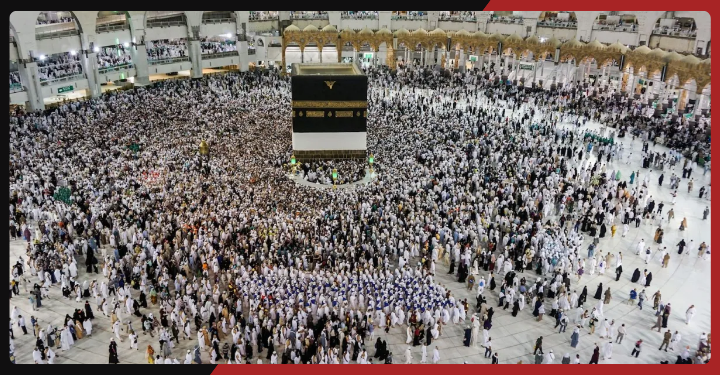
The incident is particularly sensitive because of Mecca’s religious importance. Millions of Muslims travel to the city during Hajj and throughout the year for Umrah and other forms of worship. The Grand Mosque, which houses the Kaaba, is located in Mecca.
Saudi authorities have characterized the incident as an attempted attack on the holy city. Al-Malki said it represented the second reported Houthi attempt to target Mecca, following a ballistic missile launch toward the city in July 2017.
The Saudi coalition has also warned that the security of the Two Holy Mosques is a “red line.” The statement indicates that Saudi authorities consider attacks or attempted attacks in the vicinity of Mecca and Medina to be a matter requiring a strong security response.
However, the Houthis have denied that they were targeting Mecca. Houthi officials have rejected the Saudi description of the incident and argued that the allegation was misleading. The conflicting claims mean that the precise intended target of the drone has not been independently established in the reporting.
The incident occurred during a broader increase in hostilities between Saudi-backed forces and the Houthis. The Yemen conflict has continued for more than a decade, although the intensity of fighting has varied considerably over time.
Saudi Arabia became directly involved in Yemen’s conflict in 2015, when it led a coalition supporting the internationally recognized Yemeni government against the Houthi movement. The Houthis had previously seized Sanaa and expanded their control over significant areas of Yemen.
The conflict later entered a period of reduced violence, particularly after a 2022 truce and subsequent diplomatic efforts. However, renewed fighting has recently increased pressure on Saudi Arabia and other regional actors.
Saudi authorities have reported additional Houthi missile and drone attacks in recent days. Earlier coalition statements said attacks against Khamis Mushait, Abha and Taif caused injuries to civilians and damage to property.
The latest drone incident is therefore being viewed as part of a wider pattern rather than an isolated event.
The situation is also connected to broader regional instability. Fighting involving Iran-aligned groups, disruptions around important waterways and attacks on energy infrastructure have created additional pressure on Saudi Arabia.
For Saudi Arabia, protecting the country’s major cities and religious sites remains a central security concern. The interception south of Mecca demonstrated the role of air-defence systems in preventing an approaching drone from reaching restricted airspace.
At the same time, the Houthi denial illustrates the difficulty of determining responsibility and intent during an active conflict. Both sides have competing narratives, and information released during military confrontations can be difficult to independently verify.
The reported interception has nevertheless prompted increased attention to security around Mecca. Saudi authorities have reiterated their commitment to protecting pilgrims, residents and the Two Holy Mosques.
Whether the latest episode leads to further military action remains uncertain. The immediate concern is that continued exchanges between Saudi forces and the Houthis could produce additional attacks and further expand the conflict.
The Mecca incident has consequently become one of the most sensitive developments in the latest escalation, combining a military confrontation with the security of one of the world’s most important religious centers.