


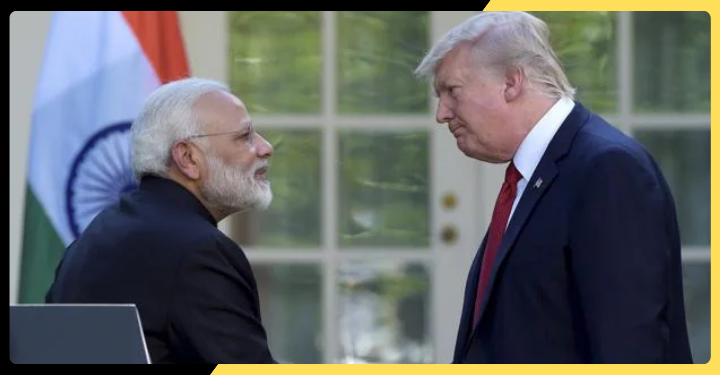
The relationship between India and the United States is entering a critical phase as Prime Minister Narendra Modi highlights concerns about a growing confidence gap ahead of his anticipated meeting with former U.S. President Donald Trump. The discussions come at a time when both countries are navigating a rapidly changing global environment marked by economic uncertainty, geopolitical competition, and evolving security challenges.
For years, India and the United States have worked to deepen cooperation across a broad range of sectors. Strategic partnerships in defense, technology, trade, and regional security have transformed the bilateral relationship into one of the most significant diplomatic engagements in the world. Despite these achievements, concerns about trust and policy consistency continue to surface, raising questions about how both nations can sustain momentum in their partnership.
Modi’s remarks regarding a confidence gap reflect the broader reality that international relationships require continuous effort and mutual understanding. While India and the United States share democratic values and many strategic objectives, they also possess distinct national interests that can sometimes create friction. Managing these differences effectively remains essential to preserving long-term cooperation.
Trade relations have emerged as one of the key areas where confidence-building measures may be necessary. The two countries maintain substantial economic ties, with bilateral trade reaching significant levels over recent years. However, disagreements over tariffs, market access, and trade regulations have occasionally led to tensions. Businesses in both countries are eager to see greater policy clarity that can support investment, innovation, and job creation.
The technology sector represents another important dimension of the relationship. India has become a major hub for digital innovation, while the United States remains a global leader in technological development. Cooperation in areas such as artificial intelligence, semiconductor manufacturing, cybersecurity, and digital infrastructure offers tremendous opportunities for both economies. Strengthening trust in these sectors could accelerate growth and enhance competitiveness on the global stage.
Defense and security cooperation also remain central to bilateral engagement. Joint military exercises, intelligence-sharing initiatives, and defense procurement agreements have strengthened strategic ties over the past decade. Both countries recognize the importance of maintaining stability in the Indo-Pacific region, where shifting power dynamics continue to influence global security considerations.
At the same time, differing approaches to certain international issues have occasionally created uncertainty. India has consistently emphasized strategic autonomy, pursuing a foreign policy that balances relationships with multiple global partners. This approach reflects New Delhi’s desire to maintain flexibility while protecting national interests. While Washington generally respects this position, differences in expectations have sometimes contributed to perceptions of a confidence gap.
The upcoming meeting between Modi and Trump is expected to provide an opportunity to address these concerns directly. Analysts suggest that open dialogue can help clarify priorities and reduce misunderstandings that may arise from differing policy perspectives. Establishing clear communication channels is often essential for building confidence between major partners.
Another important factor in the relationship is the role of the Indian diaspora in the United States. Millions of people of Indian origin contribute to American society through business, education, science, healthcare, and public service. Their success has helped create strong people-to-people connections that serve as a foundation for broader diplomatic engagement. These ties often help sustain cooperation even during periods of political disagreement.
Global developments are likely to influence the tone and substance of the discussions. Economic challenges, regional conflicts, supply chain disruptions, and technological competition are reshaping international priorities. In this environment, both India and the United States recognize the value of reliable partnerships that can support stability and economic growth.
Ultimately, the confidence gap highlighted by Modi should not be viewed solely as a challenge but also as an opportunity. Acknowledging concerns openly can pave the way for constructive solutions and stronger cooperation. If both sides demonstrate a commitment to transparency, mutual respect, and shared objectives, the meeting could mark an important step toward reinforcing one of the world’s most influential strategic relationships.
As global attention focuses on the talks, the outcome will likely shape future cooperation in trade, security, technology, and diplomacy. The ability of both leaders to address concerns and strengthen trust may prove decisive in determining the next chapter of India-U.S. relations.