


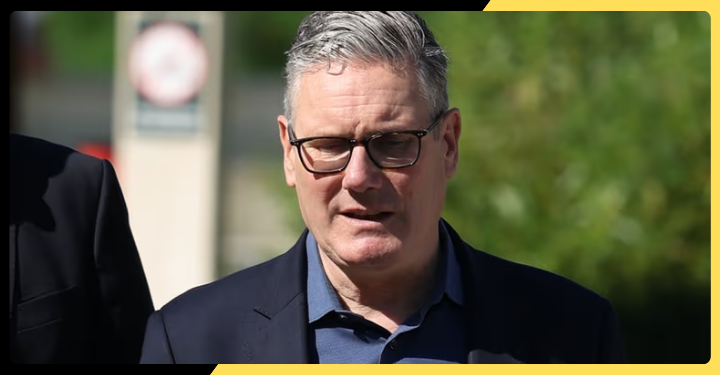
The resignation of Prime Minister Keir Starmer has intensified an already serious leadership crisis within the Labour Party. What began as internal dissatisfaction has evolved into a defining moment for the governing party, raising questions about its unity, direction, and future electoral prospects.
For months, tensions had been building among Labour MPs over policy decisions and political strategy. Some lawmakers believed the government was moving too cautiously on reform, while others feared certain initiatives could alienate moderate voters. These disagreements gradually became more public, creating the impression of a party struggling to maintain cohesion.
The situation reached a tipping point when prominent Labour figures reportedly expressed doubts about Starmer’s ability to lead the party into its next political phase. Calls for greater accountability and a fresh approach gained traction, increasing pressure on the prime minister.
Starmer’s resignation is seen by many observers as an acknowledgment that internal divisions had become too significant to ignore. Although he remained popular among some sections of the party, critics argued that Labour needed new leadership to rebuild momentum and reconnect with key voter groups.
The leadership vacuum now presents both risks and opportunities. On one hand, uncertainty could weaken public confidence and distract the government from addressing pressing national issues. On the other hand, a competitive leadership contest could energize party members and generate fresh ideas.
Potential contenders are expected to emerge quickly, each offering different visions for Labour’s future. Some candidates may advocate a more progressive agenda, while others could emphasize pragmatism and electoral appeal.
The challenge for Labour will be ensuring that the leadership contest does not deepen existing divisions. Party officials are likely to stress the importance of unity and constructive debate throughout the process.
Beyond Labour, the resignation has broader implications for British politics. Opposition parties are positioning themselves to capitalize on the uncertainty, while voters will closely watch how Labour manages the transition.
The outcome of the leadership race could influence government priorities for years to come. Economic policy, healthcare reform, housing initiatives, and foreign affairs may all be affected depending on who succeeds Starmer.
As Labour enters a period of reflection and competition, the central question remains whether the party can transform a leadership crisis into an opportunity for renewal. The answer could determine not only Labour’s future but also the direction of the country itself.