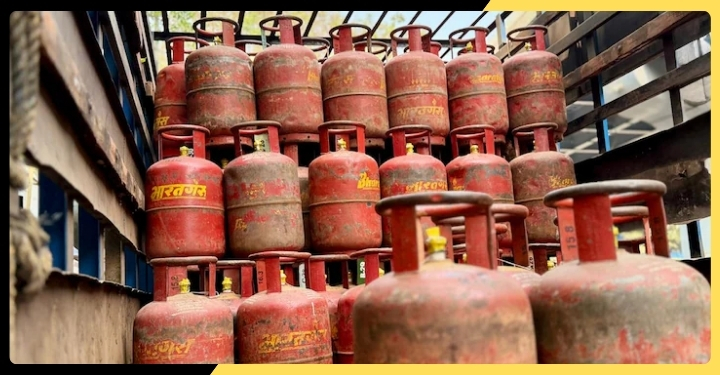
In a move aimed at optimizing the country’s cooking fuel distribution system, the government has issued an advisory encouraging households with piped natural gas (PNG) connections to surrender their liquefied petroleum gas (LPG) cylinders.
The advisory reflects the growing shift toward piped gas in urban areas. Over the last several years, city gas distribution projects have expanded significantly, bringing PNG connections to millions of homes across India. Despite this expansion, a large number of households still retain LPG cylinders as a secondary fuel source.
Government officials say this practice can lead to inefficient use of resources. LPG cylinders that remain unused in urban homes could otherwise be allocated to households in regions where PNG pipelines have not yet been installed.
The advisory therefore urges consumers with stable PNG connections to consider returning their LPG cylinders voluntarily. Doing so could help improve supply availability, particularly in rural and semi-urban areas.
Officials also note that piped gas offers several advantages for urban households. Unlike LPG cylinders, which require periodic booking and home delivery, PNG is supplied continuously through underground pipelines. Consumers are billed based on usage, similar to electricity or water services.
Energy experts say wider adoption of PNG could reduce the operational burden associated with LPG distribution. Delivering cylinders to millions of homes involves a complex supply chain that includes transportation, storage, and delivery personnel.
By encouraging consumers to rely fully on piped gas where available, the government hopes to simplify this system and allocate resources more efficiently.
However, public reaction has been mixed. Many consumers view LPG cylinders as a reliable backup during emergencies, especially when pipeline repairs or maintenance work temporarily disrupts PNG supply.
Some residents also worry about the long-term reliability of piped gas networks, particularly in rapidly growing urban areas where infrastructure is still expanding.
Consumer groups have called for clear communication and stronger infrastructure before encouraging households to surrender LPG connections. They say building confidence in PNG reliability will be key to ensuring the success of the advisory.
Despite these concerns, energy analysts believe the policy represents an important step toward modernizing India’s domestic fuel ecosystem. As pipeline networks continue to grow, the balance between LPG and PNG usage is likely to shift further toward piped gas in urban areas.
For now, officials emphasize that the advisory is meant to encourage voluntary participation rather than impose strict rules. The government hopes that awareness about efficiency, convenience, and environmental benefits will gradually persuade more households to adopt PNG as their primary and only cooking fuel.
Journalist Details