


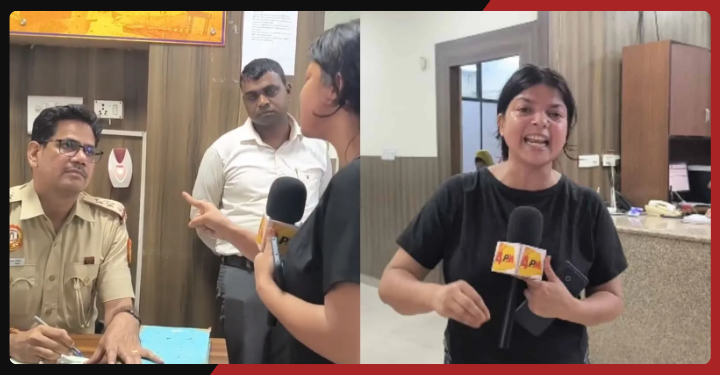
New Delhi: Allegations made by two women journalists against Delhi Police have sparked a major debate over press freedom and the treatment of reporters covering high-profile political events. Shaheen Khan and Nafisa Khan have alleged that they were detained and assaulted after attempting to report from an event in South Delhi’s Saket area.
The journalists were reportedly covering a programme attended by Delhi Chief Minister Rekha Gupta and Union Home Minister Amit Shah. Security was reportedly tight around the venue because of the presence of senior political leaders.
According to the journalists, they were stopped while attempting to carry out their reporting work and were later taken to Saket Police Station. They alleged that police personnel physically assaulted them after their detention.
The allegations became even more controversial when the journalists claimed that the alleged treatment worsened after their Muslim identity became known to police personnel. Shaheen Khan alleged that questions were asked about their identity and that their surnames revealed their religious background.
Videos and photographs circulated online showing apparent injury marks on the journalists. The visuals generated widespread outrage and led to demands for action from journalist organisations and political leaders.
Several press bodies issued statements condemning the alleged assault and called for a free and fair investigation. Their demand was based on concerns that journalists should be able to perform their professional duties without fear of violence, intimidation or discrimination.
Press freedom is considered one of the essential pillars of a democratic society. Journalists play an important role by questioning governments, reporting from difficult locations and bringing public issues to wider attention. Incidents involving alleged attacks on journalists therefore often create serious concerns beyond the individuals directly involved.
At the same time, Delhi Police has firmly denied the accusations. The police described the allegations as misleading and said that the women were stopped because of issues connected with the VVIP security route. According to the police version, they were brought to the police station for inquiry and were not assaulted as alleged.
This difference between the two accounts has become the central issue in the controversy. The journalists say they were targeted while performing their professional work and later faced violence. Police say the allegations are false and that their actions were linked to security requirements.
The case has therefore led to calls for available evidence to be carefully examined. CCTV cameras, video recordings, security deployment records and statements from witnesses could all become important in determining what actually happened.
The incident has also raised questions about the relationship between journalists and security personnel during major political events. While authorities have a responsibility to protect senior leaders and maintain security, journalists argue that security arrangements should not become a reason to unnecessarily restrict legitimate reporting.
Women journalists also face additional challenges while reporting from crowded and sensitive locations. Allegations involving physical assault against women reporters have therefore generated particular concern among media organisations.
Political reactions have further increased the visibility of the case. Opposition leaders have criticised the alleged treatment of the journalists and demanded accountability. Supporters of the journalists have said that the matter should not be dismissed without a proper investigation.
The controversy is now being closely watched as a test of institutional accountability. If the allegations are proven, there could be serious questions about police conduct and the protection of journalists. If the police version is established, authorities will argue that the incident has been misrepresented.
Until an independent examination establishes the facts, the case remains contested. But the allegations have already brought renewed attention to an important question: how safe and free are journalists when they attempt to question powerful institutions and political leaders?
The answer will depend not only on what happened in Saket but also on how transparently the allegations are investigated and addressed.