


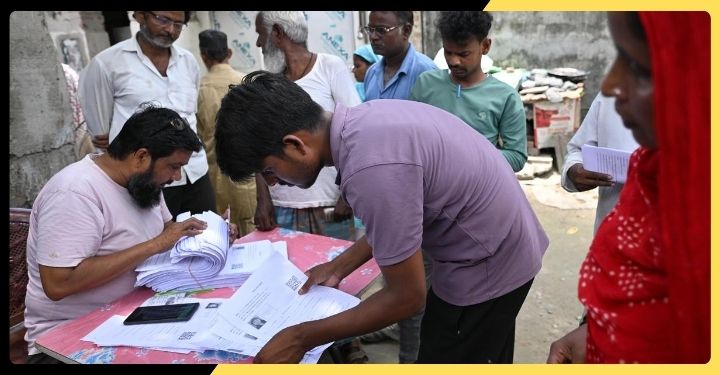
The Supreme Court has upheld the Special Intensive Revision (SIR) exercise, calling it an important measure aimed at strengthening India’s democratic framework. The judgment has provided strong support to the Election Commission’s efforts to maintain accurate voter records and improve electoral transparency.
The apex court observed that democracy depends heavily on the integrity of elections and that clean electoral rolls are crucial for preserving public trust. According to the bench, the Election Commission is constitutionally empowered to carry out verification exercises to eliminate duplicate and fake voter entries.
The matter reached the Supreme Court after petitions challenged the legality of the SIR process. Critics claimed the exercise could create hardships for poor and migrant populations who may not possess updated documents or proof of residence.
Despite these concerns, the court held that the revision exercise serves a legitimate constitutional purpose. The judges noted that ensuring the authenticity of electoral rolls cannot be viewed as discriminatory if proper safeguards are maintained.
The court clarified that the Election Commission must ensure that no genuine voter is excluded due to technical or procedural issues. Authorities were instructed to provide adequate opportunities for corrections, appeals, and document submissions during the revision process.
Election officials defended the SIR exercise by stating that voter databases require regular updating because of deaths, migration, and duplication of records. Officials argued that inaccurate rolls can undermine public faith in elections and affect electoral fairness.
Following the verdict, the Election Commission expressed satisfaction with the judgment and reiterated its commitment to conducting the exercise transparently. The Commission said public cooperation would be essential for the success of the initiative.
Political responses remained divided. Supporters of the exercise claimed the verdict would help reduce electoral fraud and increase confidence in election outcomes. Opposition leaders, however, maintained that strict monitoring is required to prevent wrongful deletions from voter lists.
Constitutional experts described the judgment as significant because it reinforces the Election Commission’s authority while emphasizing the importance of procedural fairness. Analysts believe the ruling may encourage future reforms involving digital voter verification and data-driven monitoring systems.
The Supreme Court emphasized that the right to vote is a vital democratic right and that election authorities must act responsibly during implementation. The court warned against arbitrary removals and instructed officials to maintain transparency at every stage.
Observers believe the judgment reflects the judiciary’s attempt to strike a balance between electoral integrity and voter accessibility. By supporting the SIR exercise while insisting on safeguards, the court has attempted to address both institutional concerns and public anxieties.
The verdict is expected to have wider implications for future elections in India. As debates continue over voter registration systems and electoral reforms, the judgment may serve as a reference point for future legal and political discussions.
For now, the Supreme Court’s decision has strengthened the Election Commission’s position and highlighted the importance of maintaining clean electoral rolls in the world’s largest democracy.