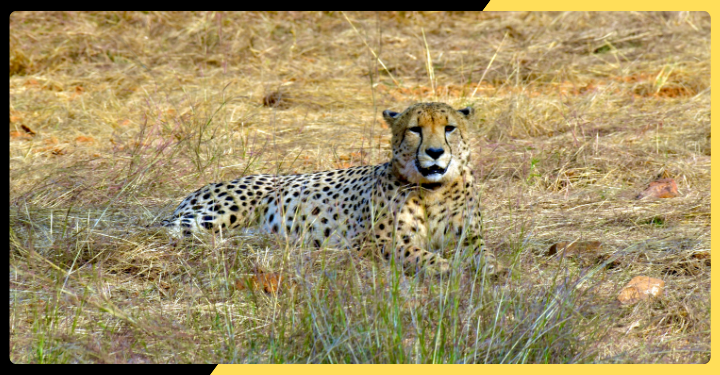
A major setback has hit India’s cheetah conservation mission after four month-old cubs were found dead at Kuno National Park in Madhya Pradesh. The deaths have raised concerns about whether soaring temperatures and difficult environmental conditions are affecting the survival of the newly introduced animals.
Officials monitoring the reserve confirmed that the cubs were discovered during a routine field inspection. The young cheetahs had been born to one of the female cheetahs brought from Africa as part of India’s high-profile Project Cheetah initiative. Their birth had been celebrated as a major sign of progress for the programme.
Preliminary reports suggest that extreme weather may have played a role in the deaths. Central India has been witnessing intense summer conditions, with temperatures in some regions crossing dangerous levels. Wildlife experts say newborn cubs are particularly vulnerable to dehydration, weakness, and heat stress, especially during the first few weeks after birth.
Authorities stated that a detailed investigation, including post-mortem analysis, has been initiated to determine the precise reason behind the deaths. Veterinary teams are also examining whether the cubs suffered from infections, nutritional issues, or other health complications.
The deaths have intensified discussions surrounding the challenges of adapting African cheetahs to Indian climatic conditions. While the species historically existed in India, conservationists note that ecosystems have changed significantly over the decades. Critics argue that current habitats may not perfectly replicate the environmental balance needed for cheetah survival.
Supporters of the project, however, believe such setbacks are not unusual in large-scale wildlife reintroduction programmes. Officials associated with the initiative said mortality among cubs in the wild is common even in African reserves and should not be viewed as evidence of failure.
The incident has also renewed focus on infrastructure and preparedness at Kuno National Park. Experts have suggested that more cooling shelters, water points, and enhanced veterinary interventions may be necessary during extreme summer months. Others have emphasized the need for stronger scientific review mechanisms to continuously assess the animals’ adaptation patterns.
Project Cheetah was launched with the aim of restoring ecological balance and reviving India’s lost cheetah population. The initiative gained international attention after cheetahs were flown from Namibia and South Africa to India in a carefully coordinated operation. The births of cubs in Kuno were hailed as historic moments in the programme.
However, the deaths of several adult cheetahs and now cubs over the past months have sparked criticism from sections of the scientific community. Some conservationists believe authorities underestimated the challenges involved in reintroducing the species into the Indian wilderness.
Local residents and wildlife enthusiasts expressed sadness after the news emerged. Many had closely followed updates from the reserve and viewed the cubs as symbols of the project’s future success. Tourism activity linked to the cheetah initiative had also increased in surrounding areas.
Government officials reiterated that monitoring efforts are being strengthened and that all remaining cheetahs are under continuous surveillance. Teams equipped with tracking technology are reportedly conducting frequent health assessments and habitat inspections.
Even as the programme faces renewed scrutiny, wildlife authorities insist that conservation requires patience and adaptation. The deaths of the four cubs serve as a reminder that restoring an extinct species is a complex and fragile process, shaped by both scientific planning and unpredictable natural conditions.
Journalist Details