


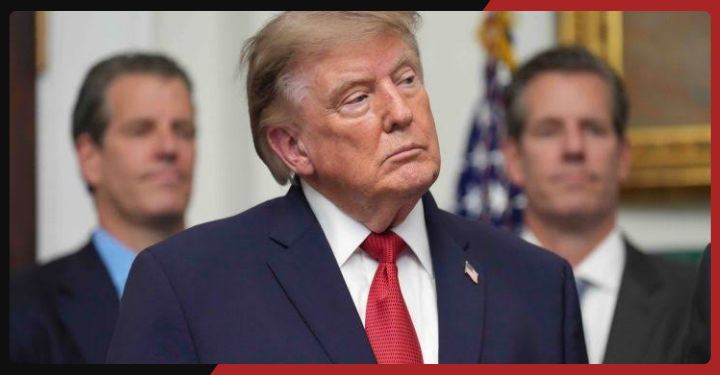
US President Donald Trump has declared what he called an “Economic D-Day” against Iran, promising an exceptionally aggressive campaign designed to isolate Tehran and cut off the financial networks that keep its economy functioning. Trump has also warned that countries assisting Iran could face what he described as tremendous economic consequences.
The statement marks one of the strongest economic threats issued by Washington since the latest US-Iran conflict began. Rather than announcing a single new sanction, Trump appears to be signaling a broader strategy that could involve banks, oil traders, shipping companies, governments and other organizations maintaining economic ties with Iran.
The US president’s warning comes at a time when diplomatic efforts between Washington and Tehran have struggled to produce a lasting breakthrough. Negotiations concerning the conflict, Iran’s nuclear program and the reopening of the Strait of Hormuz have faced repeated obstacles.
Trump has increasingly emphasized economic pressure as a way of forcing Iran to make concessions. Earlier reporting indicated that US officials believed sanctions could ultimately inflict significant damage on Iran’s economy, potentially achieving objectives that military action alone could not accomplish.
The latest strategy could therefore represent a move toward a wider economic blockade. Washington could attempt to prevent Iran from selling oil, receiving payments, accessing international banking networks and using foreign companies to move goods.
The threat to third countries is particularly important. For years, Iran has maintained commercial relationships with countries willing to continue trading despite US sanctions. Some businesses have developed complicated networks to move Iranian oil and other products through intermediaries. The Trump administration appears determined to make those activities considerably more difficult.
China is likely to be one of the biggest challenges. Beijing has remained a major purchaser of Iranian oil, meaning that aggressive enforcement against Chinese companies could have consequences far beyond the US-Iran relationship. A direct confrontation over sanctions could increase tensions between the world’s two largest economies.
Oil markets are another major concern. The Strait of Hormuz is a critical energy corridor, carrying a substantial share of globally traded oil. Any prolonged disruption can affect prices, shipping routes and energy security across Asia and Europe.
The United States has already emphasized the importance of keeping the waterway open. Previous official statements highlighted how heavily several Asian countries depend on energy moving through the region.
Iran, meanwhile, has refused to accept Washington’s demands without conditions. Tehran has accused the United States of using economic pressure to force political surrender. Iranian officials have indicated that dialogue remains possible but have rejected negotiations based on threats.
The danger is that economic warfare can produce consequences outside the intended target. If companies fear US penalties, they may withdraw from legitimate Iranian trade. That could reduce Iran’s access to foreign goods and money but could also disrupt international supply chains and increase costs for businesses.
Trump’s latest announcement therefore represents more than another round of sanctions. It is a warning that Washington may be prepared to use its enormous financial influence against countries and companies that continue helping Tehran.
Whether this strategy produces negotiations or further confrontation remains uncertain. For now, the message from Washington is clear: the United States wants Iran increasingly isolated, and it is prepared to pressure other nations to achieve that goal.