New Delhi: A dramatic rescue operation unfolded in South Delhi after a building collapsed near Saket Metro Station, leaving several people trapped beneath the debris and triggering a large-scale emergency response. Authorities confirmed that eight individuals were rescued from the site, while concerns remained over the possibility of additional victims still trapped under the rubble.
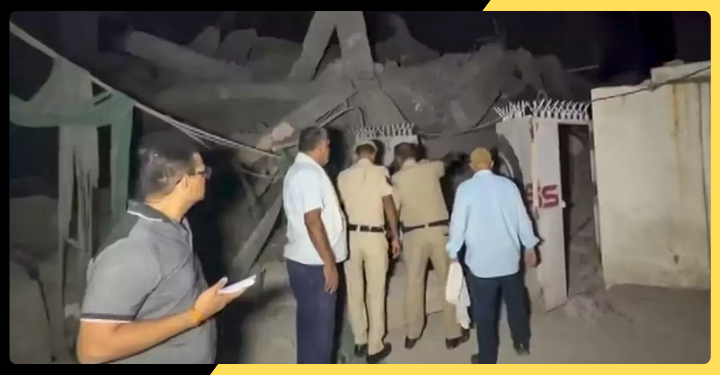
The incident occurred in a busy locality near the metro station, an area frequented daily by residents, office workers, and commuters. Witnesses reported hearing a loud cracking sound moments before the structure came crashing down. Within seconds, the building was reduced to a heap of concrete, bricks, and twisted metal, sending dust and debris into the surrounding area.
Residents and shopkeepers nearby rushed to the scene immediately after the collapse. Several people attempted to help those trapped while others alerted emergency services. The sudden nature of the incident caused panic among bystanders, many of whom feared that a larger number of occupants could have been inside the building at the time of the collapse.
Emergency personnel from the Delhi Fire Service, police department, and disaster response agencies quickly reached the location. Rescue teams began searching through the debris, carefully removing heavy slabs and damaged construction materials in an effort to locate survivors. Ambulances were stationed nearby to transport injured individuals to hospitals as soon as they were rescued.
Officials stated that eight people were successfully pulled from the wreckage during the initial rescue efforts. Medical teams provided immediate treatment at the site before transferring the injured to nearby healthcare facilities. Hospital authorities indicated that the rescued victims suffered a range of injuries, including fractures, cuts, bruises, and respiratory problems caused by exposure to dust.
Rescue workers faced significant challenges throughout the operation. The collapsed structure created an unstable environment, increasing the risk of additional debris shifting during rescue attempts. Teams were required to proceed cautiously while balancing the urgent need to locate survivors. Heavy machinery and specialized equipment were deployed to assist in clearing large sections of rubble.
Authorities also utilized advanced rescue techniques to improve the chances of finding trapped individuals. Search teams relied on specialized sensors, listening devices, and trained personnel to identify signs of life beneath the debris. Officials emphasized that every possible measure was being taken to maximize the effectiveness of the rescue operation.
Eyewitnesses described emotional scenes as rescue workers searched tirelessly for survivors. Family members of individuals believed to be inside the building gathered near the site, anxiously awaiting updates from authorities. Many expressed hope that additional victims could still be rescued despite the difficult conditions.
Local residents praised the swift response of emergency services. Several volunteers assisted rescue personnel by providing drinking water, food, and logistical support. Community members also helped manage crowds and ensure emergency vehicles could access the area without obstruction.
Police established security cordons around the collapse site to maintain public safety and facilitate rescue efforts. Traffic in the surrounding area experienced disruptions as authorities restricted vehicle movement to allow emergency teams to operate efficiently. Commuters were advised to use alternative routes until the situation was brought under control.
Investigators have launched an inquiry into the cause of the collapse. Preliminary assessments by engineers and municipal officials are expected to focus on the structural integrity of the building, its maintenance history, and whether any unauthorized construction work may have contributed to the incident.
The collapse has renewed attention on building safety standards in rapidly developing urban areas. Experts have long warned that inadequate maintenance, aging infrastructure, and violations of construction regulations can significantly increase the risk of structural failures. Safety advocates argue that stricter inspections and enforcement measures are essential to prevent future tragedies.
Residents living near the affected area expressed concerns regarding the condition of neighboring structures. Many called for immediate inspections of nearby buildings to ensure they meet safety requirements. Community representatives urged authorities to prioritize preventive measures rather than responding only after disasters occur.
Government officials stated that all relevant agencies had been instructed to provide full support to rescue and recovery efforts. Authorities assured the public that a thorough investigation would be conducted and that appropriate action would be taken if negligence or regulatory violations were identified.
As darkness approached, rescue teams continued their work under floodlights, determined to locate anyone who might still be trapped beneath the debris. Emergency responders remained committed to searching every section of the collapsed structure until all possibilities had been exhausted.
The building collapse near Saket Metro Station serves as a reminder of the challenges posed by urban infrastructure and the importance of strict adherence to safety regulations. While the successful rescue of eight individuals offered a measure of relief, the focus remained on ongoing rescue efforts and ensuring accountability once the cause of the collapse is established.
Journalist Details