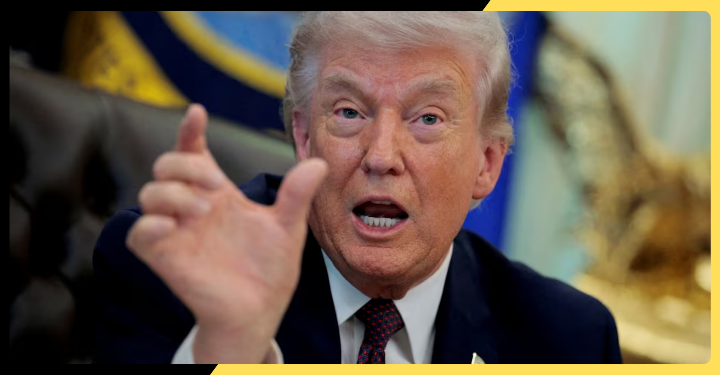
The reported confrontation between Donald Trump and Commerce Secretary Howard Lutnick over India’s trade barriers has drawn attention to the challenges involved in evaluating international economic relationships. At the center of the disagreement was the question of whether the tariff figures being used accurately reflected India’s treatment of American goods.
According to reports, Trump became frustrated during discussions about trade policy and questioned the numbers presented by Lutnick. The former president reportedly argued that the figures did not align with his understanding of India’s tariff structure and its impact on US exports. The disagreement quickly evolved into a broader debate about how trade barriers should be measured and communicated.
Trade barriers extend beyond simple tariff rates. In many cases, businesses face regulatory requirements, licensing procedures, local content rules, and other restrictions that can affect market access. These factors often make it difficult to determine the true cost of doing business in a foreign market.
India has long maintained that its trade policies are necessary to support domestic economic development. As one of the world’s fastest-growing major economies, the country has sought to balance industrial growth with international competitiveness. Indian policymakers argue that tariffs provide important protection for key sectors while allowing gradual integration into global markets.
For American companies, however, concerns about market access in India have persisted for years. Industry groups have frequently called for lower tariffs and fewer regulatory obstacles, particularly in sectors such as agriculture, medical devices, technology, and consumer goods.
Trump’s reaction reportedly reflected his broader philosophy toward trade negotiations. Throughout his political career, he emphasized reducing trade imbalances and challenging countries he believed were taking advantage of the United States. This approach often involved scrutinizing tariff rates and pressing trading partners to lower barriers.
The disagreement also illustrates the difficulty of presenting trade data in a way that satisfies both policymakers and economic experts. While economists often rely on detailed analyses that account for multiple variables, political leaders may prefer simpler metrics that are easier to communicate to the public.
Observers note that disagreements over data are common during high-level policy discussions. Different agencies and experts may use different methodologies, leading to varying interpretations of the same trade relationship. Such debates can become particularly intense when significant economic or political interests are at stake.
Despite these differences, the United States and India continue to deepen their strategic partnership. Cooperation in areas such as defense, technology, energy, and supply chains has strengthened considerably over the past decade. Both governments recognize the importance of maintaining strong ties amid evolving global economic conditions.
Trade remains one of the few areas where friction occasionally emerges. Negotiators from both countries have worked to resolve disputes and identify opportunities for greater market access. While progress has been uneven, there is widespread recognition that expanding bilateral trade would benefit both economies.
The reported exchange between Trump and Lutnick highlights the importance of accurate information in shaping trade policy. As governments seek to strengthen economic partnerships, debates over tariffs and market access are likely to remain central to the conversation. Ultimately, successful negotiations will depend on balancing national interests with the realities of an interconnected global economy.
Journalist Details