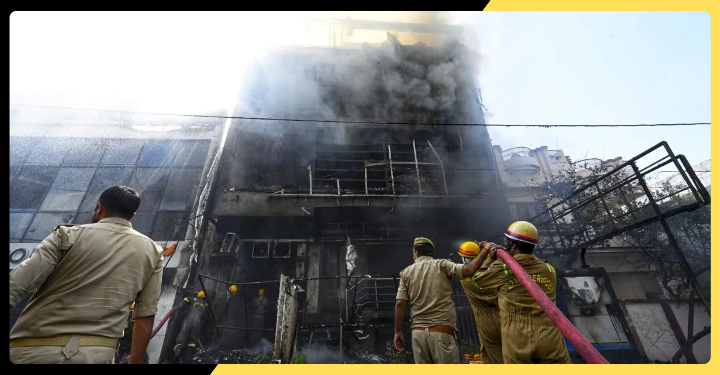
A major fire in Lucknow has triggered widespread concern and placed the city’s development authority at the center of public debate. The incident, which caused significant damage and disrupted normal activity in the area, has sparked calls for a thorough investigation into how the building was approved, monitored, and maintained.
The disaster unfolded rapidly, with flames reportedly spreading through multiple sections of the structure. Thick smoke reduced visibility and complicated evacuation efforts. Emergency teams responded swiftly, but the severity of the fire raised immediate concerns about the building’s preparedness for such an event.
As details continue to emerge, attention is increasingly focused on the regulatory framework governing commercial and mixed-use buildings. Citizens, safety experts, and public representatives are questioning whether all necessary safety clearances were obtained and whether inspection procedures were carried out effectively.
Development authorities play a crucial role in urban governance. Their responsibilities include reviewing construction plans, ensuring compliance with zoning regulations, and coordinating with safety departments before granting permissions. When a major incident occurs, scrutiny naturally extends to the effectiveness of these processes.
Fire safety professionals point out that compliance should not be treated as a one-time requirement. Buildings evolve over time as owners renovate interiors, add equipment, or alter layouts. Without continuous oversight, even structures that initially meet safety standards can become vulnerable to emergencies.
The Lucknow incident has reignited discussions about enforcement gaps. Critics argue that inspections are often irregular, while penalties for violations may not be stringent enough to deter non-compliance. In some cases, administrative delays and resource constraints further weaken monitoring efforts.
Public confidence in regulatory institutions depends heavily on transparency. Citizens are demanding disclosure of inspection reports, occupancy certificates, and safety approvals linked to the affected property. Such information could help determine whether regulatory obligations were fulfilled and identify areas requiring reform.
Urban safety advocates believe the tragedy should serve as a catalyst for broader change. Recommendations include digital monitoring systems, third-party safety audits, stricter renewal requirements for fire clearances, and mandatory emergency drills. These measures could strengthen preparedness and reduce risks in densely populated commercial zones.
The incident also highlights the importance of coordination between various agencies. Effective fire prevention requires collaboration among development authorities, fire departments, municipal bodies, and building owners. Weaknesses in any part of this chain can have serious consequences.
For affected families and businesses, the immediate priority is recovery. Yet public attention remains firmly fixed on accountability and prevention. Many believe that identifying responsibility is essential not only for justice but also for ensuring that lessons are learned.
As investigators assess the circumstances surrounding the fire, the development authority’s actions and oversight mechanisms will remain under examination. The outcome of the inquiry may shape future policy decisions and influence how urban safety is managed across the region. Ultimately, the tragedy has underscored the need for vigilance, transparency, and stronger regulatory enforcement to protect lives and property in a rapidly growing city.
Journalist Details