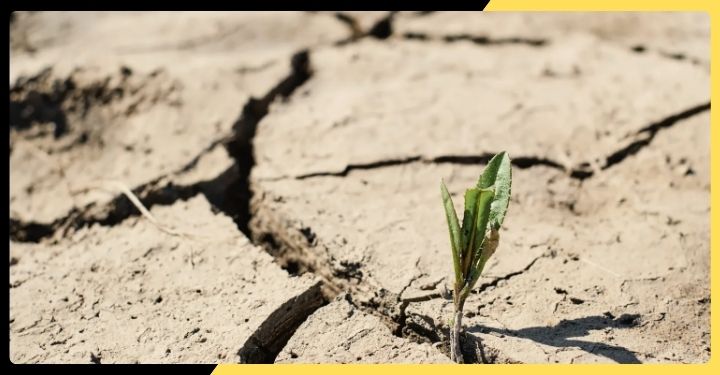
A weak start to India’s southwest monsoon has intensified concerns over the country’s agricultural outlook after June emerged as the driest in more than a decade. The rainfall deficit has slowed the sowing of key kharif crops, leaving farmers across several states uncertain about the coming harvest and its impact on their livelihoods. With agriculture continuing to support millions of rural households, experts warn that prolonged dry conditions could have far-reaching consequences for food production, rural incomes, and the broader economy.
The arrival of the southwest monsoon is one of the most anticipated weather events in India each year. Nearly half of the country’s farmland depends on seasonal rainfall rather than irrigation, making the monsoon essential for successful cultivation. Crops such as rice, cotton, soybean, maize, groundnut, pulses, and sugarcane require adequate soil moisture during the early stages of planting. When rainfall falls short during June, farmers often postpone sowing until weather conditions improve.
This year’s dry conditions have disrupted agricultural operations in several farming regions. Many growers prepared their fields in anticipation of timely rains, purchasing seeds, fertilizers, and other agricultural inputs. However, insufficient rainfall has delayed planting in many districts, forcing farmers to wait while worrying about mounting expenses. Every additional week without adequate rainfall narrows the window available for sowing and may reduce crop productivity later in the season.
Agricultural economists point out that delayed sowing can affect both crop quantity and quality. Crops planted later than usual may experience shorter growing periods, making them more vulnerable to heat stress or irregular rainfall later in the season. In some cases, farmers may choose to replace water-intensive crops with varieties that require less moisture, although such decisions often depend on local market demand and available resources.
Small and marginal farmers are among the hardest hit during periods of weak monsoon activity. Many depend on seasonal harvests as their primary source of annual income. A poor agricultural season can reduce earnings, increase debt burdens, and limit spending on education, healthcare, and household necessities. In regions where farming provides employment for agricultural laborers, delayed cultivation also means fewer work opportunities during the peak planting season.
Livestock farmers are also monitoring weather conditions closely. Reduced rainfall limits pasture growth and affects the availability of green fodder for cattle, buffaloes, goats, and sheep. Water shortages can create additional challenges for animal husbandry, particularly in drought-prone districts where livestock serves as an important supplementary source of income.
The consequences of a weak monsoon extend beyond rural communities. Agriculture contributes significantly to India’s food supply, and lower production of staple crops can influence market prices in the months ahead. If harvests decline, consumers may experience higher prices for cereals, pulses, vegetables, and edible oils. Food inflation can place additional pressure on household budgets while creating policy challenges for the government and monetary authorities.
Authorities are taking steps to minimize the impact of the rainfall deficit. State agricultural departments have issued advisories encouraging farmers to adopt climate-resilient practices, including drought-tolerant seed varieties, efficient irrigation methods, and soil moisture conservation techniques. Some states have also strengthened contingency planning to ensure the availability of seeds suitable for delayed sowing if rainfall improves during July.
Meteorologists continue to monitor the progress of the monsoon, emphasizing that seasonal performance depends on rainfall over several months rather than June alone. While an early deficit is concerning, improved rainfall during July and August could still support crop development in many areas. Farmers remain hopeful that consistent showers will allow them to complete sowing and reduce the risk of major production losses.
Climate scientists say the increasing frequency of erratic weather patterns highlights the need for long-term adaptation in Indian agriculture. Investments in irrigation infrastructure, water conservation, climate-resilient crop varieties, and modern farming practices are becoming increasingly important as weather variability grows. Strengthening these systems can help reduce dependence on unpredictable rainfall and improve resilience against future climate-related challenges.
For now, the focus remains on the skies. Farmers across India are waiting for the monsoon to regain strength, knowing that the coming weeks will determine the success of the kharif season. A timely recovery in rainfall could ease current concerns, but continued dry conditions would deepen uncertainty for millions whose livelihoods depend on agriculture.
Journalist Details