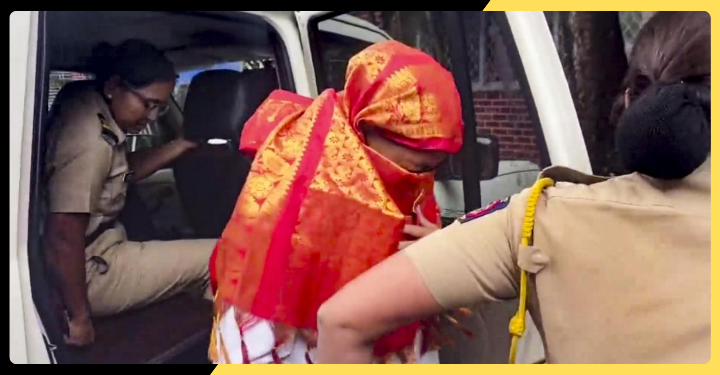
One of the most startling claims to emerge from the Pune fort murder investigation is the alleged use of a simple but carefully planned signal between the accused. According to police, the act of Siya Goyal sitting down was not random. Investigators allege it was a pre-arranged cue designed to tell co-accused Chetan Chaudhary that the victim, Ketan Agarwal, was standing in the exact position where the attack could be carried out. Police further claim that the signal was also intended to keep Siya herself out of harm’s way during the alleged assault.
Investigators believe the alleged conspiracy was planned well before the trio reached Lohagad Fort. During questioning, police claim they uncovered details suggesting that the accused discussed the location, timing, and method of the attack. Rather than using verbal communication at the scene, investigators say the suspects allegedly agreed upon a silent signal that would avoid attracting attention from tourists or creating suspicion.
According to the police investigation, Ketan and Siya were walking through one of the scenic sections of the fort when they stopped to admire the landscape. Police allege that Siya then sat down at a predetermined spot while Ketan remained standing near the edge of the cliff. Investigators believe this action served as the agreed signal that the victim was now vulnerable and that Chetan could allegedly approach without alerting him.
Police have stated that the alleged plan included an additional objective beyond simply coordinating the attack. Investigators believe the signal was also intended to protect Siya from any accidental injury. Officers suggest that if Ketan had reacted instinctively after being pushed, he might have attempted to grab the nearest person to save himself. By remaining seated and positioned slightly away from the edge, police allege Siya reduced the possibility of being pulled toward the cliff during the struggle.
This detail has become one of the central points of the investigation because it reflects the level of planning that investigators believe went into the crime. Instead of acting impulsively, police argue that the suspects anticipated various possibilities and allegedly tried to eliminate risks that could interfere with their plan or expose them to danger.
As part of the investigation, officers recreated the events at Lohagad Fort to determine whether the alleged sequence matched the physical conditions at the site. The reconstruction reportedly helped investigators examine sightlines, distances, and the positions of those involved. Police also relied on witness statements, digital evidence, and travel records while piecing together the timeline.
Authorities have indicated that the alleged signal forms only one part of a broader body of evidence. Investigators are continuing to analyse electronic communications, mobile phone records, and other forensic material to determine whether they support the theory that the crime was carefully orchestrated in advance.
The case has generated widespread public discussion because of the unusual nature of the alleged signal. A simple act such as sitting down would normally attract no attention in a crowded tourist location. According to police, that is precisely why it may have been chosen. Investigators believe the gesture allowed the alleged conspirators to communicate discreetly without speaking or behaving in a way that would raise suspicion among nearby visitors.
Despite the serious allegations, the legal process remains at an early stage. The claims made by investigators have not yet been tested in court, and the accused continue to enjoy the presumption of innocence unless proven guilty through judicial proceedings. Defence lawyers are expected to challenge the prosecution’s interpretation of the evidence during the trial.
As the investigation progresses, the alleged “sitting down” signal has become one of the most closely examined aspects of the Pune fort murder case. Whether it ultimately proves to be a decisive piece of evidence will depend on the strength of the prosecution’s case and the findings of the court after all evidence has been presented.
Journalist Details