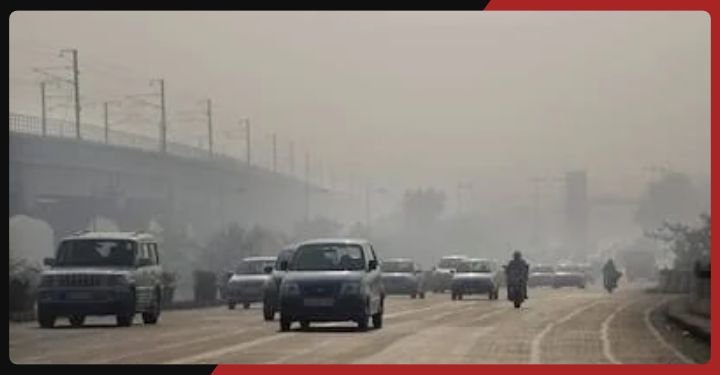
Delhi-NCR is witnessing another challenging winter pollution season as deteriorating air quality pushes the national capital into the very poor category. The situation worsened on November 2, when Delhi’s average Air Quality Index reached 324 at 4 pm, prompting the Commission for Air Quality Management to introduce Stage II restrictions under the Graded Response Action Plan.
The decision has brought pollution-control agencies across Delhi and neighbouring National Capital Region cities on alert. The measures are intended to prevent further deterioration and reduce pollution from vehicles, road dust, construction activities and waste burning.
The latest development comes just as the winter pollution-control measures introduced by the Delhi government begin taking effect. Despite these preparations, pollution levels have increased rapidly over the past few days.
Sudden Deterioration in Air Quality
Delhi experienced relatively cleaner air following rainfall in October. However, the improvement did not last long. After recording an AQI of around 60 on October 30, the city’s pollution levels began increasing.
The AQI reached 117 on October 31 before rising to 261 on November 1. By Monday afternoon, the reading had climbed to 324, placing Delhi in the very poor category.
The sudden change highlights how quickly air quality can deteriorate during the transition into winter. Weather conditions, including weak winds and limited atmospheric dispersion, can allow pollutants to accumulate close to the ground.
According to the monitoring data reported on Monday, several locations across Delhi recorded readings above 300. Jahangirpuri also entered the severe category, highlighting the seriousness of the situation in certain neighbourhoods.
Pollution-Control Teams to Intensify Operations
With GRAP Stage II now active, government departments have been instructed to strengthen their pollution-control operations.
Mechanical road sweeping will be intensified, while water sprinkling and anti-smog guns will be deployed at identified roads and pollution hotspots. These activities are designed to prevent dust particles from becoming airborne.
Authorities will also increase inspections at construction and demolition sites. Contractors and developers are expected to follow environmental regulations, including proper covering of construction materials and transportation of waste.
Open burning of garbage and biomass will remain a major enforcement priority. Municipal authorities are expected to monitor vulnerable locations and take action against violations.
Vehicle Emissions Under Scrutiny
Traffic-related pollution is another major concern for the national capital. The government has encouraged commuters to use public transportation and reduce unnecessary private vehicle journeys.
Traffic police have been directed to manage congestion at busy intersections and improve vehicle movement. Authorities will also conduct checks for valid Pollution Under Control certificates and take action against visibly polluting vehicles.
These steps are particularly important because traffic congestion can increase emissions when vehicles remain stationary or move slowly for extended periods.
Residents Face Growing Health Concerns
The worsening pollution situation has created concerns among families, particularly those with young children and elderly members.
Exposure to high levels of particulate pollution can irritate the respiratory system and worsen existing breathing problems. People suffering from asthma and other respiratory conditions may experience greater discomfort during periods of very poor air quality.
Residents are being encouraged to avoid outdoor physical activities during heavily polluted hours and follow official health advisories.
A Collective Effort Is Needed
Experts have repeatedly emphasised that Delhi’s pollution problem cannot be addressed through temporary restrictions alone. Long-term improvements require better public transportation, cleaner fuels, effective waste management and stronger dust-control systems.
GRAP Stage II provides an immediate response, but its success will depend on implementation across the entire NCR rather than Delhi alone.
Authorities will continue monitoring pollution levels and weather forecasts to determine whether additional restrictions are necessary in the coming days.
The latest pollution spike serves as another warning that Delhi’s winter air-quality challenge requires consistent action throughout the season.
Journalist Details