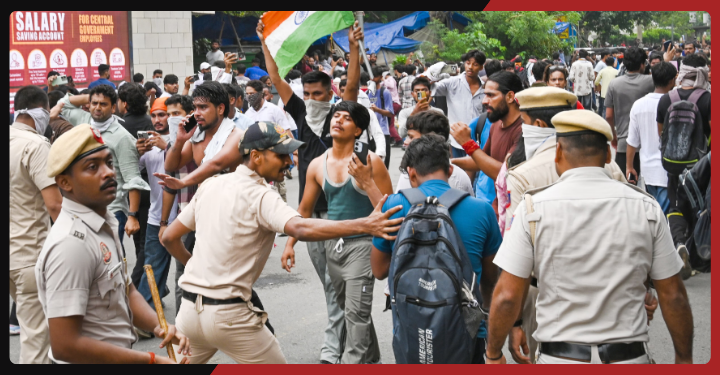
Delhi Police has introduced a new approach for personnel dealing with young protesters, focusing heavily on emotional control, professionalism and awareness of social media. The guidelines reportedly follow the recent Jantar Mantar protests, where police-protester interactions were repeatedly filmed and shared online.
The advisory recognises a reality of modern protests: officers are no longer dealing only with people standing in front of them. They are also potentially interacting with thousands of online viewers watching through short videos, livestreams and reels.
According to reports, personnel have been told not to engage with protesters unnecessarily. They have also been advised not to answer questions designed to provoke anger or sympathy. Instead, officers have been asked to remain silent unless a response is required for maintaining order. In such circumstances, a brief line — “Please cooperate, we are doing our duty” — has reportedly been suggested.
The advice reflects concerns that an angry reaction from a police officer can become the most visible part of an otherwise complicated protest situation. A few seconds of footage can be separated from its original context, edited and shared widely.
The phrase “Your angry face is their content” reportedly captures this concern. Police personnel have been reminded that protesters may deliberately attempt to provoke reactions, knowing that an emotional response could produce compelling social-media material.
The advisory reportedly mentions several methods that protesters may use to trigger reactions, including crying, making emotional appeals or asking questions involving family backgrounds and salary issues. Officers have been told not to enter into debates or conversations during such situations.
The instructions also reportedly include specific advice regarding women protesters. Police personnel have been told to avoid unnecessary physical contact with women wherever possible, while women police officers should handle such situations. The emphasis is on maintaining professionalism and reducing opportunities for avoidable confrontation.
The focus on Gen Z protesters is significant because younger demonstrators often use social-media platforms as an integral part of their activism. Recent youth-led demonstrations in India have combined traditional protest methods such as slogans and marches with memes, short videos and online campaigns.
The Jantar Mantar protests demonstrated how quickly such content can spread. Demonstrators recorded interactions with police, while images from the protest were shared across social platforms. The protests consequently became both a physical gathering and a digital event.
This creates a complicated challenge for law enforcement. Police have to maintain public order while also understanding that their actions may be judged through short clips rather than complete sequences of events.
The new guidelines appear designed to reduce this risk by encouraging officers to focus on procedure instead of personality. An officer who becomes angry, argues with a protester or reacts to mockery may unintentionally become the main character in a viral video.
By contrast, a calm and silent officer provides little dramatic material for social-media users.
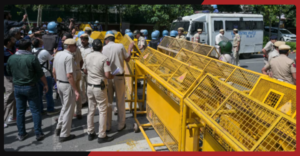
The approach does not eliminate the possibility of confrontation, particularly when crowds breach barricades or when officers face physical resistance. But it seeks to ensure that routine verbal exchanges do not unnecessarily escalate.
Ultimately, the Delhi Police advisory reflects the changing nature of public demonstrations. In the smartphone era, maintaining order is only one part of the challenge. Police personnel must also understand the power of cameras, editing and viral content.
For Delhi Police, the strategy is therefore straightforward: stay professional, avoid unnecessary arguments and remember that every reaction can become public.
Journalist Details