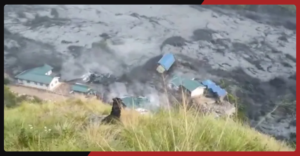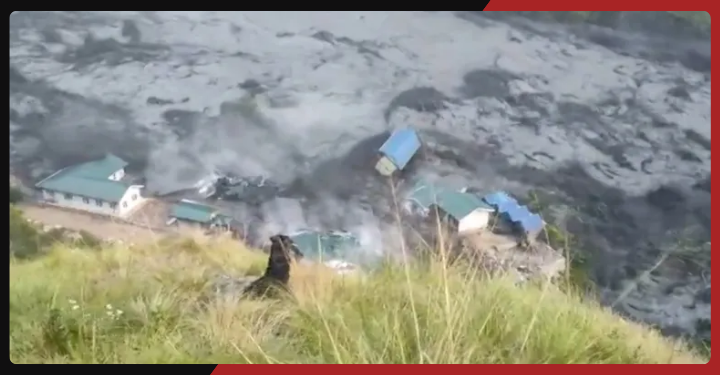
At least five people were reported missing after a destructive flash flood struck central Nepal on Sunday, sweeping away houses and bridges and damaging infrastructure along the Budhi Gandaki River. The disaster occurred in Gorkha district, where authorities launched rescue operations and urged residents in vulnerable areas to move to safer locations.
Officials suspect that a landslide upstream blocked the flow of water, creating a temporary barrier. When that blockage gave way, a sudden surge travelled downstream, causing widespread destruction. The precise origin and mechanism of the flooding remain under investigation
The missing people became the immediate priority for emergency teams. Rescue personnel were sent into affected areas to search for survivors, assess damage and determine whether other residents remained trapped or stranded. The mountainous landscape, damaged bridges and disrupted roads complicated efforts to reach some locations.
The Nepal Army deployed personnel and helicopters to support the emergency response. An Associated Press report said 49 people had been rescued by the army as authorities worked to evacuate people from affected areas. Subsequent reporting cited higher rescue totals, indicating that the operation was continuing and figures were being updated.
The flood caused substantial damage to homes and essential infrastructure. Several media reports described houses being swept away, bridges collapsing or disappearing into the current, and a hydropower project site suffering damage. The destruction has raised concerns about the safety of people living near the river and the difficulties they may face while seeking assistance.
Authorities issued evacuation warnings to communities along the Budhi Gandaki River and downstream waterways. Residents were advised to avoid riverbanks and move to higher ground because water levels could continue to change. Such warnings are especially important in narrow mountain valleys, where floodwaters can rise quickly and leave little time for people to escape.
The disaster also highlighted the danger of landslide-related flooding. In mountainous terrain, falling earth and rock can temporarily block a river, creating a natural dam. Water can build up behind the obstruction before breaking through and releasing a sudden, powerful surge. The resulting flood may carry large quantities of sediment and debris, making it particularly destructive.
The International Centre for Integrated Mountain Development said preliminary accounts suggested that the failure of a temporary river blockage created by a landslide near Chumchet in Gorkha district may have triggered the event. The organisation noted that flooding was estimated to have begun at around 4 a.m. local time on October 11.
The latest disaster comes as Nepal continues to face the consequences of previous severe flooding and landslides. Communities already affected by earlier emergencies remain vulnerable to further disruption, while rescue services must balance immediate operations with the need to protect other at-risk settlements.
As the search continues, officials face the challenge of confirming the fate of missing residents and providing reliable information to affected families. Authorities must also evaluate damage to houses, bridges, roads and energy infrastructure before longer-term recovery work can begin.
The coming hours will be critical for search operations, evacuation efforts and the assessment of further flood risks. Residents have been urged to follow official warnings and avoid returning to dangerous areas until authorities determine that conditions are safe.
Journalist Details