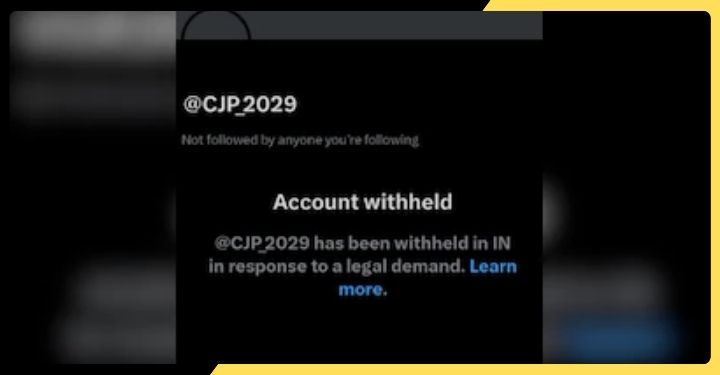
The viral parody account “Cockroach Janata Party” has become the center of a major online controversy after its founder claimed the account was withheld in India by X. The development has triggered intense reactions across social media platforms, with supporters calling it censorship and critics defending stricter moderation of political content.
Known for its biting satire and meme-based political commentary, the account had attracted significant attention over recent months. Its posts frequently targeted politicians, public policies, and trending national debates using exaggerated humor and fictional political narratives. Many users described it as one of the most recognizable satire pages in India’s online political landscape.
The controversy erupted when Indian users reportedly began seeing a notice stating the account had been withheld in response to a legal demand. Soon after, screenshots circulated widely, sparking debates about free speech and digital regulation.
The founder accused authorities of suppressing satire and discouraging online criticism. In a strongly worded reaction, the founder said parody should not be criminalized or treated as dangerous political activity. Supporters echoed the claim, arguing that satire is an essential feature of open societies.
Social media platforms have increasingly faced pressure from governments worldwide to regulate online content more aggressively. In India, platforms are expected to comply with local legal requests, particularly in matters involving public order, misinformation, or sensitive political issues. However, critics argue that vague enforcement can sometimes undermine democratic freedoms.
The incident drew responses from digital rights organizations, which warned that blocking satire pages could discourage creative expression online. Experts noted that humor-based political commentary has become one of the most influential forms of internet communication among younger audiences.
At the same time, some critics defended the restriction, claiming parody accounts can spread misleading narratives disguised as jokes. They argued that viral meme pages hold significant influence and should be subject to clearer accountability standards.
Despite the debate, the blocking has only increased the visibility of “Cockroach Janata Party.” Supporters continued sharing archived memes and screenshots from the account, keeping the controversy trending online. Many users argued that attempts to suppress satire often end up amplifying its reach instead.
The incident has once again highlighted the fragile relationship between political satire, public sensitivity, and platform regulation in India’s rapidly evolving digital environment.
Journalist Details