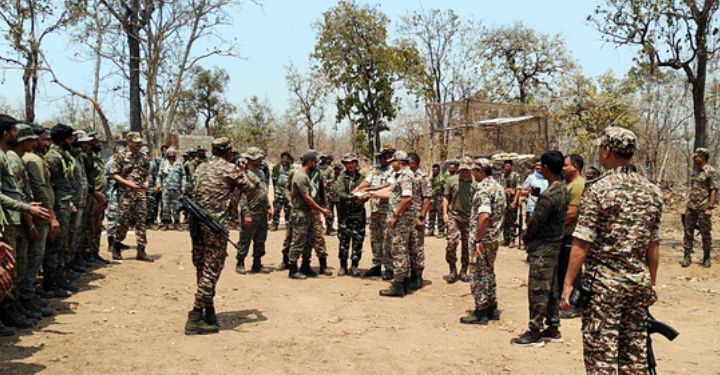
This article would provide an in-depth look at the Maoist insurgency in Chhattisgarh, focusing on a particularly deadly series of encounters in Bijapur and Kanker that led to the death of 30 Maoist militants and 1 security personnel. The report would begin by providing an overview of the Maoist insurgency, its roots in the socio-economic conditions of tribal communities, and how these factors have led to decades of violent conflict in the region. It would explore the significance of Bijapur and Kanker as key locations for Maoist activity and how these districts have become a battleground in the ongoing war between insurgents and the Indian state.
Description of the Military Operation: The article would give a detailed description of the military operation that led to the confrontation. Using available intelligence, security forces mounted a targeted offensive in the areas of Bijapur and Kanker, where Maoist presence had been reported. The report would include details about the forces involved, such as the CRPF, local police units, and other paramilitary forces, explaining their preparation and response to the conflict. It would focus on the tactical challenges faced by the security forces, such as navigating dense forests, dealing with the ambush tactics of the insurgents, and minimizing civilian casualties.
Technological Tools in Counterinsurgency: An important part of the article would explore how the security forces have used technological tools to gain an advantage in the fight against Maoists. This would include aerial surveillance, satellite imagery, and drones that help gather real-time intelligence and track the movements of insurgents in the dense jungles of Chhattisgarh. The article would highlight the evolving nature of counterinsurgency operations, with a focus on how technology is increasingly being leveraged to improve operational effectiveness.
Insights from Security Experts: Experts in counterinsurgency would be consulted to provide insights into the nature of these encounters and what it takes for security forces to succeed in such operations. The article would analyze the long-term effects of these operations on both the security forces and the Maoist groups. For example, while the loss of 30 Maoists may be seen as a significant blow to the insurgency, experts would debate whether such successes truly reduce the overall threat posed by Maoist groups in the long run.
The Maoist Perspective and Responses: The article would also touch on the Maoist perspective, explaining why these groups continue to engage in armed rebellion against the state. The reasons behind the persistence of Maoist insurgency in Chhattisgarh—such as the state’s failure to address issues like land rights, unemployment, and poor infrastructure—would be explored. The article would highlight how Maoist groups use violence not just as a military tactic but as a form of resistance against perceived state oppression and socio-economic injustice.
Impact on Local Populations: A key segment would be dedicated to understanding the impact of the conflict on local populations, particularly the tribal communities. These groups often bear the brunt of the violence, with many displaced due to military operations and the presence of armed groups. The article would examine the government’s role in providing relief to these communities and the challenges of offering both security and development in a region that has long been marginalized.
The Future of the Maoist Insurgency in Chhattisgarh: The article would conclude by discussing the future of the Maoist insurgency in Chhattisgarh. While the death of 30 rebels is a significant blow, experts would argue that the insurgency is unlikely to disappear entirely. The article would discuss whether the Indian government’s counterinsurgency strategies—focused on military intervention and infrastructure development—are sufficient to address the root causes of the conflict. It would also highlight the need for a more comprehensive approach that includes political dialogue, poverty alleviation, and greater autonomy for tribal regions.
The conclusion would consider the long-term challenges that lie ahead in Chhattisgarh, including the need to strike a balance between security measures and socio-economic reforms. The possibility of a peace process or a new approach to resolving the insurgency would be suggested, although the challenges of achieving lasting peace in the region remain immense.
Journalist Details