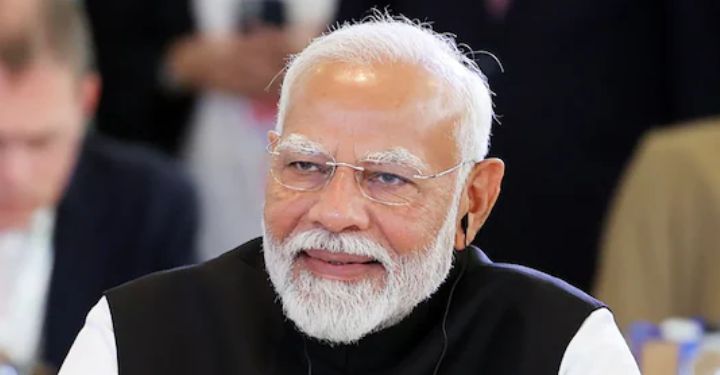
Indian Prime Minister Narendra Modi is set to join leaders of the world’s most advanced economies at the G7 Summit taking place in Kananaskis, Alberta, Canada from June 15 to 17, 2025. His presence comes at a time when global tensions—ranging from economic instability to climate emergencies and regional conflicts—have created an atmosphere of unprecedented uncertainty.
Canada, as the 2025 G7 host, extended the invitation to India earlier this year, recognizing the country’s increasing influence in global affairs. Canadian Prime Minister Mark Carney, hosting his first G7 summit, personally invited Modi to take part in high-level discussions focused on climate action, digital governance, energy transition, and security coordination.
Though not a G7 member, India’s presence reflects the summit’s shift toward broader inclusivity. Modi’s participation marks the seventh time India has been invited to the forum, underlining the international community’s growing recognition of New Delhi’s pivotal role on global issues.
“India is proud to partner with the world’s leading economies in promoting peace, prosperity, and sustainability,” said an official statement from the Indian Ministry of External Affairs. “We look forward to meaningful discussions and concrete outcomes at the Kananaskis Summit.”
The summit’s venue, nestled in the Canadian Rockies, carries symbolic significance. Kananaskis was the site of the 2002 G8 Summit, and its selection this year reflects a desire for focused, distraction-free diplomacy amid increasingly complex global conditions.
The summit agenda is ambitious. Leaders will deliberate on pressing challenges including the global economic slowdown, supply chain disruptions, climate resilience, artificial intelligence governance, and the war in Eastern Europe. India is expected to contribute prominently to conversations on economic development, energy security, and digital transformation.
India’s perspective will be especially important on issues concerning the Global South. As one of the largest developing economies, India will push for greater equity in climate financing, access to clean technology, and reform of global institutions to reflect 21st-century realities. Modi is also likely to raise concerns about rising protectionism and advocate for more open, rules-based trade frameworks.
Bilateral meetings are also on the agenda. Modi is expected to meet with several G7 leaders, including President Donald Trump of the United States and Prime Minister Shigeru Ishiba of Japan. With Indo-Pacific tensions continuing and multilateral cooperation becoming more crucial, these sideline talks could lead to new understandings on regional stability, economic engagement, and defense collaboration.
Experts see India’s invitation as part of a wider shift in how the G7 engages with the rest of the world. “The G7 can no longer operate as an exclusive club,” said Dr. Reema Kulkarni, a global governance expert. “Involving India, which represents over one-sixth of the world’s population, is a recognition of the new geopolitical reality.”
In recent years, India has increased its global footprint, not just through its economic growth but also through its active participation in international platforms like the G20, the Quad, and the BRICS group. The G7 summit offers another opportunity for India to assert its vision of a multipolar, inclusive, and cooperative world order.
The summit will also be watched for signs of thaw in strained India-Canada relations. Following months of diplomatic tension, the two nations could use the occasion to reset ties and explore common ground, particularly in trade, education, and climate cooperation.
Security preparations in Kananaskis are extensive, with Canadian authorities ensuring the venue is sealed off to potential disruptions. The secluded setting is designed to foster uninterrupted dialogue, though large numbers of media and civil society representatives are expected to follow the proceedings closely.
Environmental issues will feature prominently in this year’s summit, and India is expected to showcase its clean energy leadership. Modi will likely highlight India’s push toward solar and hydrogen energy, along with its commitment to reaching net-zero emissions by 2070. Additionally, India’s Digital Public Infrastructure (DPI) model is gaining traction internationally and is anticipated to be part of discussions on responsible AI and data governance.
India’s presence at the G7 summit adds moral and strategic weight to the deliberations. While the G7 countries represent established powers, India represents a dynamic, democratic voice from the Global South—bridging the gap between the world’s developed and developing nations.
For Prime Minister Modi, the summit provides an opportunity to reinforce India’s diplomatic credentials while engaging directly with top global decision-makers. With a range of critical issues at stake, the world will be watching to see not only what the G7 resolves, but also how India helps shape those outcomes.
Journalist Details