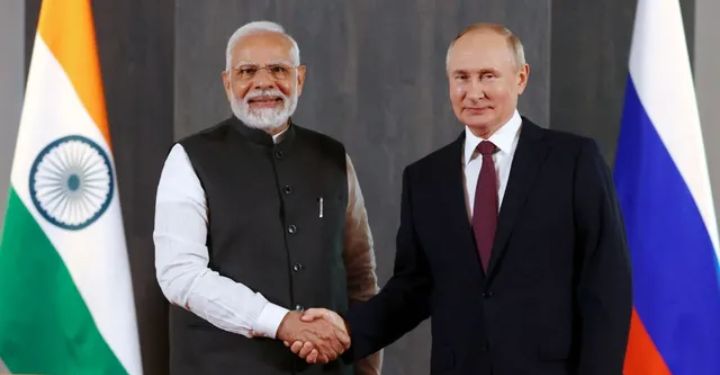
In an era marked by escalating global tensions and shifting alliances, Russian President Vladimir Putin’s acceptance of Indian Prime Minister Narendra Modi’s invitation to visit India comes at a critical juncture in international relations. The invitation, which was extended during a phone call between the two leaders, signals the strengthening of the long-standing strategic partnership between India and Russia. This visit is expected to address a variety of diplomatic and economic issues that will have broader implications for global geopolitics.
A Symbol of Growing India-Russia Ties
India and Russia have shared a strong relationship for decades, rooted in mutual respect, trust, and a shared vision for a stable, multipolar world order. The upcoming visit is expected to reaffirm the depth of this partnership and highlight the growing cooperation between the two nations in multiple spheres, including defense, energy, trade, and regional security.
Putin’s decision to visit India is particularly significant in light of recent global events, including the ongoing war in Ukraine and tensions between Russia and NATO. As Western powers impose sanctions on Russia, Moscow has increasingly looked toward countries like India to bolster its diplomatic and economic standing on the global stage. India, for its part, has consistently maintained a neutral stance on the conflict, advocating for dialogue and diplomacy over confrontation.
Bilateral Trade and Economic Cooperation
One of the main areas of focus during Putin’s visit is expected to be trade and economic cooperation. In recent years, Russia and India have taken steps to deepen their economic ties, with both countries recognizing the mutual benefits of greater collaboration. The trade relationship between Russia and India is diverse, covering sectors such as energy, defense, information technology, and pharmaceuticals.
India has been a key market for Russian energy exports, particularly oil and gas. With the rising demand for energy in India, particularly in the wake of the COVID-19 pandemic, Russia’s role as a major supplier of energy is expected to be discussed. Additionally, both countries are likely to explore new opportunities for joint ventures and investments, particularly in sectors where they both have complementary strengths, such as nuclear energy and technology.
Defense and Strategic Cooperation
Defense cooperation remains a cornerstone of the India-Russia partnership, and it is likely to be a focal point during Putin’s visit. Russia has been a major supplier of defense equipment to India for decades, providing everything from fighter jets to advanced missile systems. The two countries regularly conduct joint military exercises, which enhance their operational interoperability and foster closer ties between their armed forces.
Putin’s visit is expected to further cement this defense cooperation, with discussions on expanding joint military training, technology transfer, and co-production of defense equipment. In addition, both countries are likely to address the changing security landscape in the Indo-Pacific region, where both Russia and India share concerns about regional stability and the growing influence of China.
Energy Collaboration
Energy security is another critical area of cooperation between India and Russia. India’s rapidly growing economy requires a stable and diversified energy supply, and Russia, with its vast energy resources, is an essential partner in meeting these needs. During Putin’s visit, both countries are expected to discuss new initiatives to strengthen their energy ties, including expanding trade in oil, natural gas, and nuclear power.
India has been working with Russia on various nuclear energy projects, and this collaboration is expected to be deepened in the coming years. Both countries are also likely to explore new opportunities for cooperation in renewable energy, as they look to diversify their energy portfolios and meet their respective climate goals.
Geopolitical Considerations
The global geopolitical landscape has shifted dramatically in recent years, and Putin’s visit to India takes place against the backdrop of rising tensions between Russia and the West. The war in Ukraine has polarized global opinion, with NATO countries and their allies supporting Ukraine, while Russia has sought to strengthen its ties with non-Western countries like China and India.
India, with its non-aligned foreign policy, has been cautious in its approach to the Ukraine conflict, calling for an immediate ceasefire and dialogue between the warring parties. The country has also emphasized the need for a multipolar world order, where no single country or bloc dominates global affairs. This position aligns with Russia’s vision of a world where power is distributed among several centers, rather than concentrated in the hands of the West.
During Putin’s visit, it is likely that the two leaders will discuss how India and Russia can cooperate on global issues such as regional security, climate change, and counterterrorism. Both countries have a shared interest in promoting a stable and peaceful international order, and their collaboration on these issues could have far-reaching implications for global governance.
Conclusion
Putin’s acceptance of Modi’s invitation to visit India is a significant step in the ongoing evolution of India-Russia relations. This visit underscores the strong and enduring ties between the two nations, highlighting their shared interests in defense, energy, and regional stability. As global geopolitics continues to evolve, the partnership between India and Russia is likely to become increasingly important, with both countries playing a key role in shaping the future of international relations.
Journalist Details