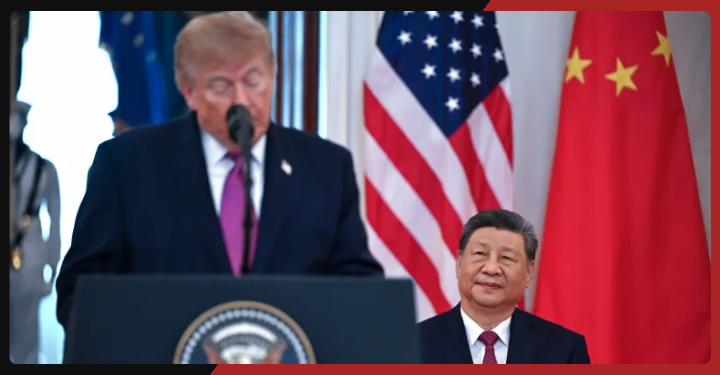
Trade was one of the most important subjects surrounding the Trump-Xi meeting, and the extension of the existing trade truce provided one of the clearest immediate outcomes. The arrangement gives Washington and Beijing additional time to negotiate instead of allowing existing tensions to automatically return to a higher level.
The United States and China have spent years using tariffs, export controls and other economic measures as instruments of national policy. During the earlier escalation, tariffs increased dramatically while China responded with its own measures against American products and restrictions involving strategically important materials.
The temporary agreement therefore matters because it reduces the immediate risk of another major escalation. However, the extension does not itself resolve the fundamental disputes.
According to Reuters, US Treasury Secretary Scott Bessent said the two countries had extended their trade truce by two months. The additional period is intended to provide negotiators with more time to work through outstanding economic issues.
Those issues are extensive.
One major question concerns tariffs. Both countries have used tariffs as leverage, and businesses have had to adapt to changing import costs and supply-chain conditions. A longer-term agreement would need to establish how tariffs are adjusted and which products remain subject to additional duties.
Another issue involves Chinese purchases of American goods. Washington has previously sought greater access for US agricultural, industrial and other products in the Chinese market. Beijing, meanwhile, has its own interests in maintaining stable access to the American market.
Rare-earth materials represent another critical part of the economic relationship. China occupies an important position in the global supply chain for several rare-earth elements and related processing capabilities. These materials are important for industries ranging from electronics and clean-energy technology to defence production.
The United States has therefore been attempting to reduce vulnerabilities in strategic supply chains. China, on the other hand, has used its position in global manufacturing and mineral processing as part of its broader economic leverage.
Technology restrictions create another layer of complexity. Washington has imposed controls affecting advanced technology exports to China, particularly in areas connected to semiconductors and artificial intelligence. Beijing has criticised American technology restrictions and has sought to strengthen domestic technological capabilities.
The economic relationship has consequently become much broader than the traditional question of tariffs on consumer goods. It now involves national security, industrial policy, advanced computing, critical minerals and supply-chain resilience.
For American companies, a period of greater stability could provide more certainty when making investment and sourcing decisions. Chinese businesses may similarly benefit from reduced uncertainty regarding access to the American market.
But uncertainty remains because the extension is temporary.
Al Jazeera reported before the summit that the existing trade arrangement was due to expire in November and had been extended to January 10. The additional time was expected to be used for negotiations over a broader framework.
This means the Washington summit should be viewed as part of an ongoing economic negotiation rather than the conclusion of the trade dispute.
The outcome will matter well beyond Washington and Beijing. US-China trade affects manufacturers, exporters, technology companies, farmers, shipping companies and consumers around the world. Countries that supply components to either economy also feel the effects of changing trade rules.
The temporary extension therefore provides breathing room, but the central economic questions remain open. The coming months will determine whether the two sides can convert that breathing room into a more durable commercial arrangement.
Journalist Details