The relentless monsoon rains that have battered Mumbai, Palghar, Raigad, and several other parts of Maharashtra have turned increasingly deadly, with the state government confirming that at least 13 people have lost their lives over the past three to four days. The fatalities have been attributed to a combination of rain-related incidents, including wall collapses, landslides, drowning, electrocution, and falling trees. As rescue and relief operations continue, officials have urged residents to remain indoors unless absolutely necessary and to follow weather advisories issued by local authorities.
According to the Maharashtra government, the deaths occurred in different districts, highlighting the widespread impact of the ongoing monsoon spell. Emergency response teams have been working around the clock to rescue stranded residents, clear blocked roads, and restore essential services in areas severely affected by flooding and heavy rainfall. Disaster management officials fear that the death toll could rise if rainfall continues at its current intensity, particularly in vulnerable hilly and coastal regions.
Mumbai, India’s financial capital, has witnessed several tragic incidents caused by continuous rainfall. In some areas, old structures weakened by water seepage partially collapsed, trapping residents under debris. Fire brigade personnel and National Disaster Response Force (NDRF) teams were immediately dispatched to carry out rescue operations. Fortunately, several people were rescued in time, but others succumbed to injuries before they could receive medical attention.
In Palghar district, overflowing rivers and flooded streams created dangerous conditions for nearby villages. Reports indicated that some residents attempting to cross submerged roads or swollen water channels were swept away by strong currents. Rescue teams equipped with boats searched affected areas, while local authorities advised people not to venture into floodwaters under any circumstances.
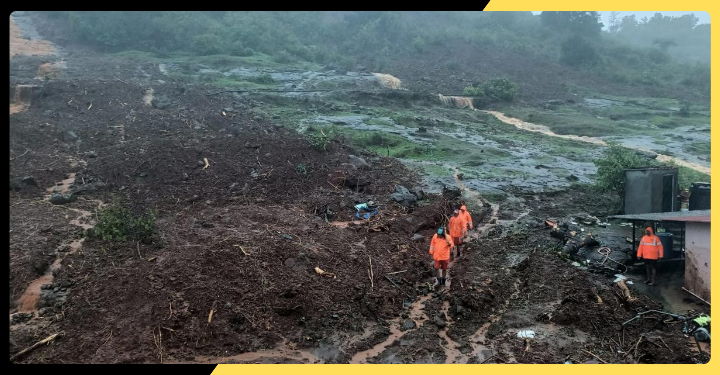
Raigad district also experienced multiple rain-related accidents. The district, known for its hilly terrain, remains particularly vulnerable to landslides during periods of intense rainfall. Heavy showers loosened soil on mountain slopes, triggering minor landslides that blocked roads and disrupted traffic movement. Although major landslides were avoided in several locations due to preventive evacuations, authorities continued monitoring unstable hillsides as a precaution.
Strong winds accompanying the rain also uprooted hundreds of trees across Mumbai and surrounding districts. Several vehicles were damaged after trees fell on roads, while power lines snapped in many neighborhoods, causing temporary electricity outages. Municipal workers, supported by emergency crews, worked tirelessly to remove fallen trees and restore power supply.
Electrocution remains another significant concern during the monsoon season. Flooded streets often conceal damaged electrical cables, creating serious hazards for pedestrians. Authorities repeatedly reminded residents to avoid touching electric poles, transformers, or fallen wires during heavy rainfall. Public awareness campaigns have been intensified through television, radio, and social media to educate citizens about monsoon safety.
Hospitals across the affected regions have remained on high alert, with emergency departments prepared to receive patients injured in rain-related incidents. Medical staff have been working extended shifts to provide immediate treatment, while ambulances faced delays reaching some locations because of waterlogged roads and traffic congestion.
The Maharashtra government has announced compensation for the families of those who lost their lives due to the natural disaster. Officials assured that financial assistance would be provided promptly, along with support for families whose homes were damaged or destroyed. District administrations have also established temporary relief camps for residents displaced by flooding, offering food, drinking water, medical care, and shelter.
Meanwhile, meteorologists have warned that the threat is far from over. Weather forecasts indicate that additional spells of heavy to very heavy rainfall may continue over parts of Maharashtra in the coming days. Authorities are particularly concerned about regions located near rivers, reservoirs, and steep hillsides, where saturated soil increases the risk of landslides and flash floods.
Emergency response agencies, including the NDRF, State Disaster Response Force (SDRF), police, fire brigade, and local volunteers, have intensified patrols in high-risk zones. Teams remain ready to conduct evacuations if water levels rise further or if fresh landslide threats emerge. Control rooms have been activated in multiple districts to coordinate rescue efforts and respond quickly to distress calls.
Community organizations and volunteers have also played a crucial role during the crisis. Many local groups have distributed food packets, drinking water, blankets, and medicines to stranded families. Youth volunteers have assisted elderly residents, children, and people with disabilities in reaching safer locations. Their efforts have complemented the work of government agencies, demonstrating the spirit of solidarity during difficult times.
Experts emphasize that while heavy monsoon rainfall is a natural seasonal phenomenon, rapid urbanization, poor drainage systems, and environmental degradation have increased the vulnerability of many cities and towns. They stress the importance of strengthening disaster preparedness, improving infrastructure, and implementing long-term flood management strategies to reduce the impact of future extreme weather events.
As Maharashtra continues to battle the ongoing monsoon emergency, protecting lives remains the highest priority. Authorities are urging residents to remain cautious, avoid flooded areas, monitor official weather updates, and cooperate fully with emergency responders until conditions improve.
Journalist Details