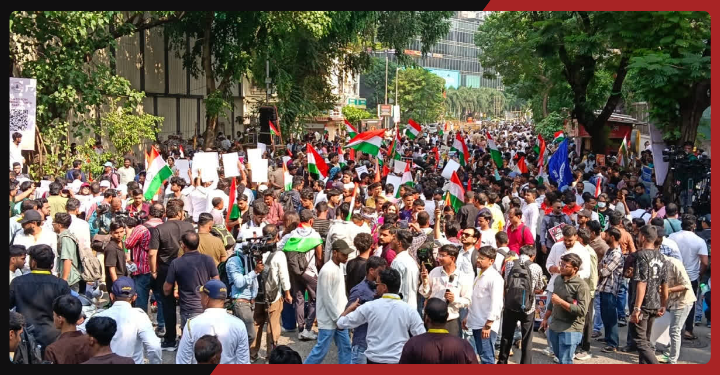
The demand for Chief Election Commissioner Gyanesh Kumar’s resignation has become the central issue of a new protest campaign led by Cockroach Janta Party founder Abhijeet Dipke, with the activist-politician warning that the movement could eventually turn its attention toward Prime Minister Narendra Modi.
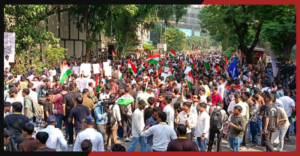
Dipke made the remarks during a major demonstration at Mumbai’s Shivaji Park, where CJP supporters gathered to protest the functioning of the Election Commission. The immediate focus of the demonstration was Kumar and the controversy surrounding electoral-roll revisions, particularly the Special Intensive Revision process.
According to recent reports, Dipke said the organisation would intensify its campaign if Kumar did not resign. The CJP has announced plans for further mobilisation, including a proposed demonstration at Jantar Mantar in Delhi.
The political significance of the protest comes from the fact that the Election Commission is constitutionally responsible for supervising elections and maintaining electoral rolls. Any controversy involving voter registration or deletion can therefore generate substantial public and political attention.
Critics of the SIR process have alleged that large numbers of names have been removed from electoral rolls and have questioned whether the process could disproportionately affect voters. These allegations have become a major part of the political campaign against Kumar. The Election Commission and the government, however, have rejected allegations that electoral procedures are being manipulated to benefit a particular political party.
The dispute has also received attention because of reported differences among Election Commission officials. The Indian Express reported that two Election Commissioners had raised objections multiple times over a period of months regarding decisions connected to the revision process. Such disagreements have contributed to public scrutiny of the commission, although they do not independently establish that any election law was violated.
Dipke has attempted to turn the issue into a broader campaign for electoral transparency. The CJP previously became known nationally through protests surrounding the examination-paper leak controversy and is now seeking to build another movement around election-related concerns.
The group’s latest campaign has included demonstrations in Mumbai and plans for action in Delhi. Reports said hundreds of people were detained during protests in the national capital when demonstrators attempted to reach Jantar Mantar. The events have generated another debate about the right to protest and the authorities’ handling of political demonstrations.
Dipke’s statement about Modi adds another layer to the controversy. Rather than limiting the campaign to the Election Commission, he has suggested that failure to address the demand concerning Kumar would lead to a subsequent demand involving the prime minister. This is a political position expressed by Dipke and does not constitute an official finding by a court, election authority or other independent institution.
The coming days could determine whether the dispute remains focused on the Election Commission or develops into a broader political confrontation. The CJP has indicated that it intends to continue protesting, while opposition groups and civil-society organisations have also raised questions about electoral-roll revisions.
At the centre of the debate is the question of how voter lists should be updated while ensuring that eligible citizens are not wrongly excluded. The Election Commission has the responsibility of maintaining accurate electoral rolls, while critics are demanding greater transparency in the process.
Dipke’s campaign has therefore placed Gyanesh Kumar at the centre of a growing political controversy. Whether the resignation demand produces any institutional response remains uncertain, but the announcement of further protests indicates that the issue is unlikely to disappear immediately from the public debate.
Journalist Details