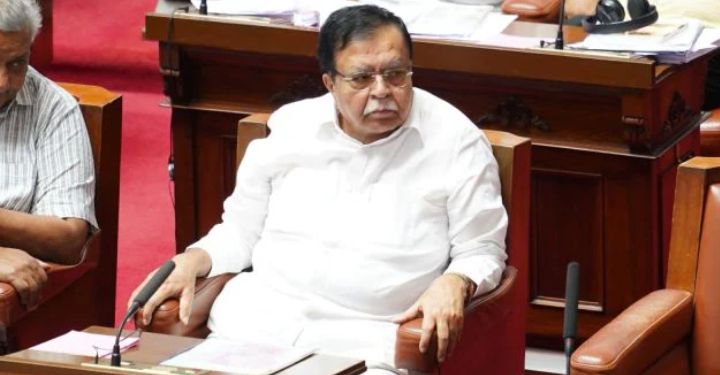
The political scene in Karnataka has been shaken by startling revelations from the state’s Cooperation Minister, K N Rajanna, who has accused certain factions of orchestrating a honey trap conspiracy targeting 48 Members of the Legislative Assembly (MLAs) in the state. The Minister’s allegations not only highlight a massive attempt to manipulate political figures but also suggest that he himself is on the radar of those responsible for this nefarious plot. The allegations have sparked intense debates within political circles, with some questioning the timing and motivations behind these claims, while others see them as a reflection of the lengths to which some political players are willing to go.
The Honey Trap Allegations: A Political Conspiracy
The concept of a “honey trap” is not new to the world of politics. It involves using romantic or sexual manipulation to ensnare political figures and extract sensitive information or force them into compromising positions. According to K N Rajanna, a well-organized conspiracy involving honey traps has been set up to target prominent MLAs in Karnataka. These MLAs, who hold considerable sway in the state’s political arena, were reportedly approached by individuals who used seduction and deceit as tools to trap them.
While the identities of the MLAs involved have not been fully disclosed, Rajanna has indicated that these 48 individuals represent a broad cross-section of political parties in the state, making the conspiracy appear even more complex and politically motivated. The Minister has emphasized that the plot is not just an isolated incident but part of a larger effort to destabilize the state’s political system and undermine the democratic processes that keep the government intact.
Rajanna’s Personal Involvement: A Direct Threat
What sets Rajanna’s case apart from the others is his own involvement in this conspiracy. According to Rajanna, he was personally targeted by the same faction involved in the honey trap scheme. He claims that he received multiple overtures, including attempts to lure him into private meetings with individuals seeking to entrap him. The Minister is convinced that these moves were designed to destroy his political career and reputation.
Rajanna’s allegations raise the stakes significantly. If indeed he is a target, it would suggest that the conspiracy is not only about blackmailing individual politicians but also about taking down high-profile leaders in Karnataka. Rajanna has indicated that these honey trap attempts are a strategic move to discredit and destabilize powerful figures in the state’s ruling coalition. The implications of such claims are far-reaching, as they point to a potential nexus between external influences and internal political rivalries, leading to a political showdown.
The Deepening Crisis in Karnataka Politics
The timing of Rajanna’s statement comes at a critical juncture in Karnataka’s political history. The state has witnessed growing tensions in its coalition government, with various factions within the ruling party vying for influence. These internal conflicts, coupled with the rise of opposition groups seeking to capitalize on any sign of weakness, have created a volatile political environment.
Rajanna’s accusations only add fuel to the fire. Many see these claims as an attempt to highlight the vulnerability of the state’s political leaders to manipulation. If the honey trap allegations are proven true, they would underscore the fragility of political institutions in Karnataka and suggest that some political forces are willing to resort to underhanded tactics to maintain or acquire power.
The state’s political crisis is further compounded by accusations of corruption, power struggles, and a lack of accountability within the ruling coalition. In such an environment, honey trap schemes could be seen as just one of many tools used to weaken opponents and gain an advantage. However, if these conspiracies are widespread, they threaten to undermine the public’s faith in the integrity of Karnataka’s political system.
Rajanna’s Call for Investigation
In the wake of his shocking revelations, Rajanna has called for a thorough investigation into the honey trap conspiracy. He has urged the state police and investigative agencies to dig deep into the matter and identify those responsible for orchestrating these plots. Rajanna has been vocal about his belief that the individuals behind the honey traps are not just acting on their own but are part of a larger network with political motivations.
Rajanna’s request for a transparent and impartial investigation is crucial for restoring public confidence in the state’s political system. Given the high stakes, an independent investigation would help ensure that the truth is uncovered without political interference. Moreover, it would serve as a warning to those who may attempt similar schemes in the future, signaling that such tactics will not be tolerated in Karnataka’s political landscape.
At the same time, Rajanna has called for heightened security measures for political leaders in the state, emphasizing that the threats posed by such conspiracies are real and could have serious consequences on the safety of public figures. The Minister has also raised concerns about the growing use of personal and emotional manipulation to influence political decisions, urging a reevaluation of how politicians engage with constituents and fellow leaders to avoid such situations in the future.
Political Reactions to Rajanna’s Allegations
As expected, Rajanna’s statements have drawn a range of reactions from various political groups. Within the ruling coalition, his allegations have been met with support. Leaders from his party have expressed solidarity, condemning the honey trap plot and calling for swift action against those responsible. This solidarity underscores the political unity that often arises when one of its own faces external threats. It also highlights the serious concern among ruling party members about the extent to which political rivalries have descended into manipulative tactics.
However, not all political figures are convinced by Rajanna’s claims. Opposition parties, including key players like the Bharatiya Janata Party (BJP) and Janata Dal (Secular), have demanded clear evidence of the honey trap conspiracy before jumping to conclusions. Some leaders from the opposition have even suggested that Rajanna’s allegations may be part of a political maneuver aimed at gaining public sympathy, especially in light of the mounting challenges faced by the ruling coalition.
The media too has played a significant role in amplifying the debate surrounding the allegations. Some media outlets have backed Rajanna’s claims, citing their own investigations into the political climate in Karnataka. Others have raised questions about the timing of his statements, especially in light of recent scandals that have plagued the state’s government. The media’s role in dissecting the allegations is crucial, as it can influence public opinion and shape the discourse around the ongoing investigation.
The Public’s Concern: Trust in Politics Erodes
The most significant impact of Rajanna’s allegations has been on the public’s trust in the political system. Karnataka’s citizens, who have already been disillusioned by years of political instability and corruption, are now forced to grapple with the idea that their leaders are being manipulated by malicious forces. Public trust in politicians is already low in many parts of the state, and revelations of this nature only deepen the skepticism surrounding elected officials.
Many ordinary citizens have expressed their frustration, asking why political leaders continue to engage in such practices instead of focusing on the issues that matter most to them, such as healthcare, education, and employment. For the public, the honey trap scandal feels like yet another betrayal of their faith in the democratic process.
The question that remains is whether Karnataka’s political leaders can rise above these allegations and work together to restore the integrity of the state’s governance. If the investigation proves Rajanna’s claims true, it will serve as a harsh reminder of the dangerous undercurrents that can exist in the world of politics, with far-reaching consequences for both the political class and the people they serve.
The Need for Political Reform and Security
In light of Rajanna’s allegations, the need for political reform in Karnataka has never been more apparent. There is an urgent need to address the vulnerabilities that exist within the state’s political system, particularly in terms of transparency, accountability, and the security of politicians. Strengthening safeguards to protect political leaders from manipulation, blackmail, and personal attacks is essential for maintaining the health of democracy in the state.
Additionally, there is a growing call for a reevaluation of how politicians interact with both their peers and the public. Clear boundaries must be set to ensure that interactions are based on mutual respect and not open to exploitation by malicious elements seeking to advance their own agendas.
Conclusion: A Pivotal Moment for Karnataka Politics
The honey trap conspiracy allegations raised by Cooperation Minister K N Rajanna have exposed the darker side of Karnataka’s political landscape. Whether the claims are true or not, they have opened a broader conversation about the lengths to which political operatives will go to achieve their goals and the vulnerability of politicians to these tactics.
In the coming days, the investigation into the honey trap conspiracy will likely unfold, revealing whether there is a coordinated effort to destabilize Karnataka’s political system. For now, Karnataka stands at a crossroads, with its political future in the balance. How it responds to these revelations will determine whether the state can overcome these challenges and move toward a more secure and transparent future.
Journalist Details