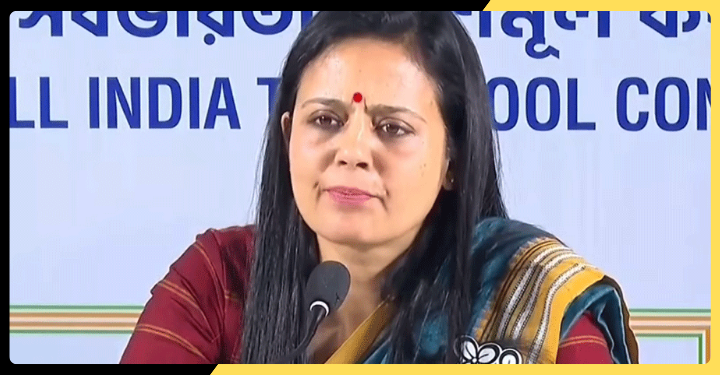
Trinamool Congress (TMC) leader Mahua Moitra has emphasized that Mamata Banerjee remains the cornerstone of the party’s political legitimacy, reaffirming her loyalty to the West Bengal Chief Minister and highlighting the pivotal role she continues to play in shaping the organization’s identity. Moitra’s remarks come amid ongoing political discussions regarding leadership, succession, and the future trajectory of the Trinamool Congress.
According to Moitra, the Trinamool Congress derives its credibility and public acceptance largely from the leadership and vision of Mamata Banerjee. Her statement reflects a widely held belief within the party that Banerjee’s political journey and personal connection with voters are central to the TMC’s enduring success in West Bengal and its growing influence beyond the state.
Since founding the party in 1998, Banerjee has remained its undisputed leader. Her decision to break away from the Congress and establish a regional political movement marked the beginning of a significant shift in West Bengal politics. Through years of organizational work, grassroots mobilization, and electoral campaigns, she transformed the Trinamool Congress into a formidable political force capable of challenging long-established power structures.
The party’s defining moment came in 2011 when it ended the Left Front’s uninterrupted rule of more than three decades in West Bengal. That victory not only altered the state’s political landscape but also established Banerjee as one of India’s most influential regional leaders. Since then, the TMC has continued to secure electoral victories under her leadership, strengthening her position as the party’s primary political asset.
Moitra’s comments are particularly noteworthy because they address broader conversations surrounding leadership within political organizations. As parties evolve and expand, questions often arise about the distribution of authority, future leadership arrangements, and the emergence of new influential figures. By asserting that Banerjee continues to define the TMC’s legitimacy, Moitra sought to underscore the importance of continuity and stability within the organization.
Political observers argue that leadership remains one of the most critical factors in determining a party’s success. While strong organizational structures and effective policies are important, charismatic and trusted leaders often become the face of political movements. In the case of the Trinamool Congress, Banerjee’s image and political narrative have become inseparable from the party itself.
Over the years, Banerjee has cultivated a reputation as a leader who remains closely connected to ordinary citizens. Her grassroots style of politics, frequent public interactions, and emphasis on welfare initiatives have contributed significantly to her popularity. Supporters often view her as a leader who understands local concerns and responds directly to the needs of the people.
Mahua Moitra, one of the TMC’s most prominent national voices, has consistently defended the party’s leadership and policy positions. Her reaffirmation of support for Banerjee reflects not only personal loyalty but also a broader organizational sentiment. Many within the party continue to regard Banerjee as the unifying force capable of bringing together diverse political interests under a common vision.
Analysts suggest that such statements also carry strategic importance. Political parties frequently face challenges from opposition groups seeking to portray them as divided or uncertain about their future direction. Public endorsements of leadership help counter such narratives by reinforcing an image of unity and discipline.
The Trinamool Congress has expanded its ambitions beyond West Bengal in recent years. While the state remains its primary base, the party has increasingly participated in national political discussions and attempted to broaden its presence in other regions. Throughout these efforts, Banerjee’s leadership has remained a central component of the party’s strategy and messaging.
Supporters argue that the TMC’s electoral achievements are closely tied to Banerjee’s ability to connect with voters across social and economic backgrounds. Her political journey, marked by persistence and resilience, has earned her a loyal following. This connection has helped the party maintain relevance even during periods of intense political competition.
Moitra’s remarks also serve as a reminder of the historical foundations of the Trinamool Congress. The party was built around a vision of regional empowerment, grassroots participation, and strong leadership. Banerjee’s role in shaping these principles continues to influence the party’s functioning and public image.
As political activity intensifies in the lead-up to future elections, maintaining a cohesive organizational structure will remain essential for the TMC. Leadership clarity often plays a key role in ensuring that party workers, supporters, and voters remain confident about the organization’s direction.
In reaffirming that Mamata Banerjee continues to define the Trinamool Congress’s political legitimacy, Mahua Moitra has delivered a message of continuity and confidence. Her statement reflects the enduring influence of Banerjee within the party and underscores the belief that the TMC’s past achievements and future aspirations remain closely tied to the leadership of its founder. As the party looks ahead to new challenges, Banerjee’s role is expected to remain central to its political identity and success.
Journalist Details