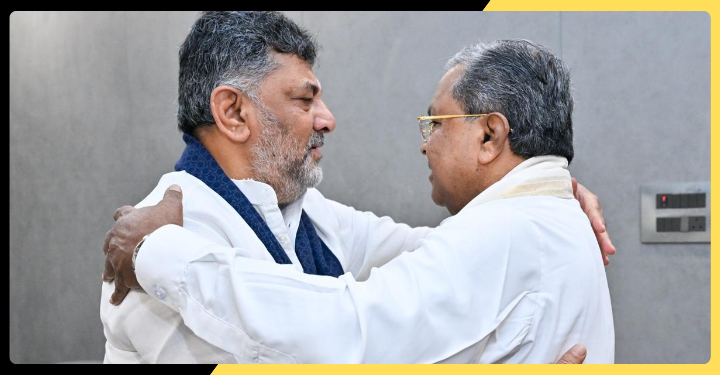
A major political development has emerged in Karnataka as official sources confirmed that Chief Minister Siddaramaiah is expected to step down from his post. The information was reportedly shared with Cabinet colleagues during internal discussions, triggering intense speculation about the next leadership change in the state. The move, if officially announced, could mark a significant turning point in Karnataka politics and reshape the ruling party’s strategy ahead of future electoral challenges.
According to sources, the decision was communicated privately during a Cabinet-level interaction where senior ministers were informed about the leadership transition plan. While there has been no formal public announcement from the Chief Minister himself, party insiders indicate that the leadership change may happen in the coming days. The development has already sparked political reactions from opposition parties and triggered high-level consultations within the ruling camp.
The possible resignation comes amid ongoing debates over power-sharing arrangements and leadership balance within the state unit. Political observers note that discussions regarding rotational leadership had surfaced earlier as well, though party leaders consistently avoided public confirmation. With the latest developments, those earlier speculations have once again returned to the center of Karnataka’s political discourse.
Supporters of Siddaramaiah have praised his tenure, highlighting welfare initiatives, social schemes, and governance reforms introduced under his administration. Several ministers reportedly expressed emotional reactions during the internal discussions, acknowledging his contribution to the party and the state. Leaders close to him maintain that the transition is being carried out in a disciplined and organized manner to ensure stability in the government.
Meanwhile, opposition parties have intensified their criticism of the ruling alliance, claiming that the leadership change reflects internal instability. Leaders from the opposition camp argued that the government has been distracted by internal power struggles instead of focusing on public issues. They also demanded clarity on who would replace Siddaramaiah and whether the change would affect ongoing developmental projects.
Within political circles, attention has now shifted toward possible successors. Several senior leaders are being discussed as potential candidates for the top post. However, the party high command is expected to make the final decision after consultations with legislators and central observers. Analysts believe the leadership transition could be carefully timed to avoid administrative disruption.
The development has also created a buzz among party workers across Karnataka. Local units have begun holding meetings to discuss the implications of the change, while supporters of different factions are trying to project their preferred leaders. Despite the uncertainty, senior leaders have appealed for calm and party unity.
Experts believe that the resignation, if formally announced, could have both short-term and long-term political consequences. In the short term, it may create uncertainty regarding governance and policy continuity. In the long run, however, the ruling party may attempt to use the transition as a strategy to strengthen its position before upcoming elections.
Political analysts also point out that Karnataka has often witnessed dramatic leadership shifts that significantly impacted state politics. From coalition collapses to internal rebellions, the state has experienced multiple power transitions over the years. This latest development could once again redefine alliances and factional equations within the ruling structure.
As the situation unfolds, all eyes remain on the official announcement from the Chief Minister’s Office and the party leadership. Whether Siddaramaiah’s resignation becomes effective immediately or after a transition process remains unclear. What is certain, however, is that Karnataka politics has entered another crucial phase with far-reaching implications for the state’s political future.
Journalist Details