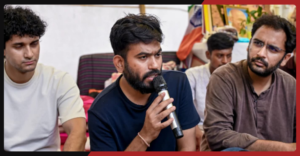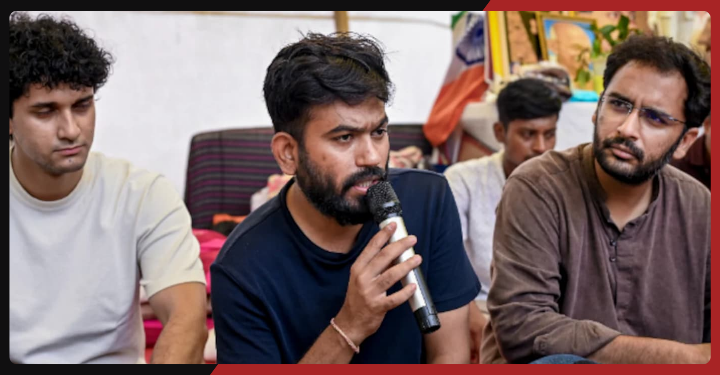
New Delhi, October 16, 2026: Security arrangements have been tightened in central Delhi ahead of the Cockroach Janta Party’s proposed “Lehra Do Tiranga” demonstration, with CJP founder Abhijeet Dipke vowing to continue his campaign despite the possibility of detention. The planned gathering has become the latest flashpoint in a wider dispute involving electoral reforms, opposition to voter-list revisions and restrictions on public assemblies.
The CJP has called for a demonstration at Central Park in Connaught Place, with a parallel gathering planned at Mumbai’s Azad Maidan. The organisation says the events are intended to show solidarity with its detained leaders and renew its demand for Chief Election Commissioner Gyanesh Kumar’s resignation.
Dipke has presented the national flag as the central symbol of the campaign. He has said that participants intend to wave the Tiranga peacefully and that the possibility of imprisonment would not persuade the organisation to abandon its position.
However, the proposed Delhi gathering faces significant restrictions. Police have referred to prohibitory orders under Section 163 of the Bharatiya Nagarik Suraksha Sanhita and the lack of permission for a large assembly at the intended location. Central Park has also been closed to the public for October 16 and 17, according to reports.
Authorities have stressed that the issue is not the national flag itself. Instead, they have distinguished between the right to display the flag and the requirement to obtain permission for an organised gathering in a restricted public area.
The Delhi High Court declined to issue an order stopping the proposed protest and took note of the police’s assurance that the event would be regulated. Police subsequently indicated that a small group of 11 people could be allowed to carry the national flag and sing the national anthem at a suitable location in Central Park.
That arrangement has created a difficult question for the organisers: whether a limited symbolic gathering would adequately represent a movement seeking to draw attention to its political demands.
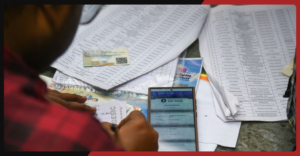
The planned protest follows earlier demonstrations against the Special Intensive Revision of electoral rolls. CJP supporters have alleged that the process has resulted in the removal of an extremely large number of names, raising concerns about whether eligible citizens could lose access to their voting rights.
The Election Commission has defended the revision process, saying it is intended to remove duplicate or otherwise ineligible entries and that eligible people can seek enrolment. The dispute therefore involves both the scale of the changes and questions about the safeguards available to affected voters.
The arrest and detention of CJP leaders Ashutosh Ranka and Saurav Das have further intensified the confrontation. The organisation says their detention is one reason for the latest call to demonstrate. Authorities, however, have maintained that legal restrictions on assemblies must be respected.
Mumbai presents a somewhat different situation. Reports indicate that police have permitted the gathering at Azad Maidan, which is designated for demonstrations. This distinction illustrates how protest arrangements can vary according to the venue, permissions and local restrictions.
The developments have attracted attention because the proposed action combines a symbolic national gesture with a direct political demand. For supporters, the Tiranga represents citizenship and democratic participation. For authorities, maintaining public order remains a key concern when large gatherings are announced in heavily visited urban areas.
The immediate outcome will depend on whether organisers and police can reach a workable arrangement. The larger issue, however, is unlikely to disappear with a single demonstration. Electoral transparency, voter registration and the boundaries of peaceful protest remain central to the ongoing political debate.
Journalist Details