Nearly 11 lakh names were reportedly removed from Delhi’s electoral rolls in the period before the Special Intensive Revision exercise began, creating a new controversy over the management of voter records in the national capital.
The reported deletions took place between January 2025 and June 2026, a period of around 16 months. For many affected citizens, the deletion reportedly remained unnoticed until they attempted to participate in the SIR process.
The development has raised concerns because electoral registration is not something most citizens check regularly. Once a person’s name has appeared on the voter list and they have received an EPIC card, many assume that their registration will continue unless they personally request a change.
But electoral rolls are continuously updated. Names can be removed because a voter has died, permanently shifted residence, registered at another location or been identified as a duplicate entry. Administrative errors can also occur, which makes verification and communication especially important.
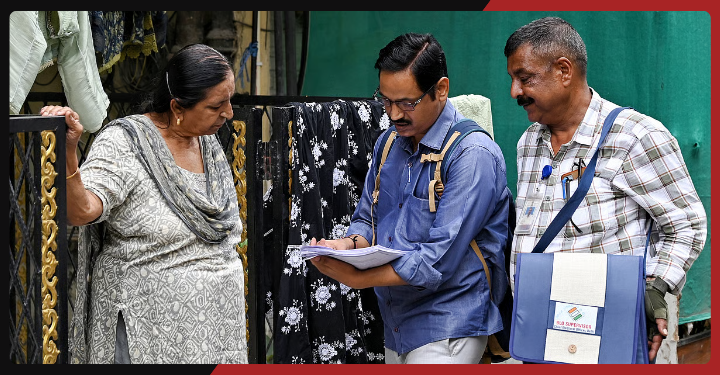
According to recent reporting, at least several voters said they had no idea that their names had disappeared from the electoral rolls until the SIR exercise created a situation where their family members received Enumeration Forms but they did not.
That difference became the first indication for some people that something was wrong.
The situation highlights a major challenge in election administration: a voter can be unaware of a deletion until an important election or revision exercise arrives. By that time, restoring the name may require additional applications, documents and verification.
The Special Intensive Revision was designed as a large-scale exercise to verify and update electoral rolls. The Election Commission has said such revisions include safeguards intended to protect eligible voters and provide opportunities for claims and objections.
However, the controversy surrounding the pre-SIR deletions is different. If a person’s name had already been removed before June 30, 2026, that person was not necessarily part of the standard database used at the beginning of the SIR enumeration process.
Reports indicated that Enumeration Forms for such voters were not automatically generated, meaning they could face difficulties participating through the same route as voters whose names remained on the list.
This has sparked a broader discussion about whether electoral authorities should establish stronger notification systems. In today’s digital age, voters could potentially be informed through SMS, email, official applications or public notices whenever their registration status changes.
Such a system could reduce the number of citizens who discover a deletion months or years later.
The controversy is also important because Delhi’s electoral rolls have undergone an extraordinary period of revision. The SIR draft list published in late August showed a dramatic reduction from approximately 1.45 crore pre-SIR electors to around 97.53 lakh names in the draft roll.
Political parties have strongly debated these changes, while election authorities have emphasised the need to remove ineligible and duplicate entries.
But beyond the political arguments lies the experience of ordinary voters.
For someone who has lived at the same address for years and voted previously, discovering that their name has disappeared can be deeply confusing. The process of correcting that problem must therefore be accessible and clearly explained.
The story of Delhi’s nearly 11 lakh pre-SIR deletions is ultimately about more than statistics. It is about the connection between citizens and the democratic system.
A clean electoral roll is essential. But ensuring that every eligible voter remains informed and has a realistic opportunity to correct mistakes is equally important.
Journalist Details