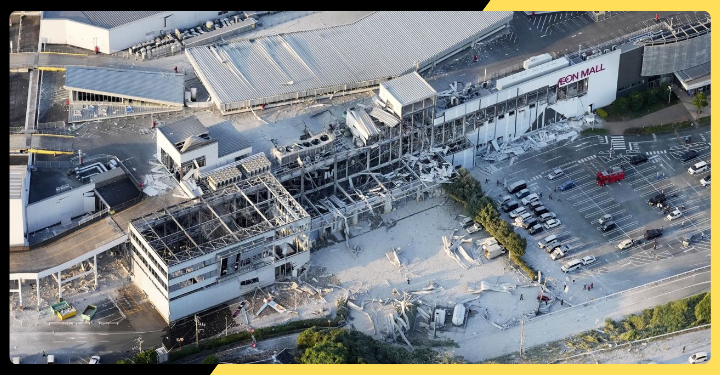
A powerful magnitude 7.1 earthquake struck Japan, unleashing widespread destruction and panic before a devastating explosion inside a crowded shopping mall turned the natural disaster into a deadly humanitarian emergency. The twin incidents claimed several lives, injured dozens of people, and left emergency responders battling unstable structures, fires, and the constant threat of aftershocks as they searched for survivors buried beneath tonnes of debris.
The earthquake struck during business hours when offices, schools, and shopping centres were filled with people. Within seconds, violent tremors shook buildings across the affected region. Ceiling panels collapsed, shelves crashed to the ground, and glass windows shattered as frightened residents rushed outdoors in search of safety.
Japan’s nationwide earthquake early warning system alerted millions of people moments before the strongest shaking reached major cities. Public transportation operators immediately slowed or halted trains, while factories temporarily suspended operations as emergency protocols were activated. Despite these measures, the strength of the quake caused significant damage to roads, buildings, and public infrastructure.
Just as people believed the worst had passed, a powerful explosion ripped through a busy shopping mall that had already been damaged by the earthquake. Witnesses described hearing an enormous blast followed by thick clouds of black smoke rising above the city skyline. Flames quickly spread through parts of the building as frightened shoppers scrambled toward emergency exits.
The explosion caused sections of the shopping mall to collapse, trapping customers, employees, and security personnel inside. Vehicles parked outside were damaged by flying debris, while nearby buildings suffered broken windows and structural damage from the force of the blast. The surrounding streets quickly filled with emergency vehicles as authorities sealed off the area.
Survivors described scenes of complete chaos inside the mall. Some recalled lights suddenly going out before the explosion shook the building. Others spoke of helping strangers escape through emergency exits while avoiding falling concrete and shattered glass. Parents searched desperately for children separated during the panic, while store workers guided elderly shoppers to safety despite the dangerous conditions.
Within minutes, firefighters, police officers, paramedics, and specialised rescue teams arrived at the disaster site. Fire crews immediately began tackling multiple fires that had broken out after the explosion, while search-and-rescue units carefully entered unstable sections of the building. Rescue personnel used thermal imaging cameras, drones, listening devices, and trained search dogs to detect signs of life beneath collapsed structures.
Heavy construction equipment was brought in to remove large pieces of concrete and twisted steel. However, rescuers proceeded cautiously to avoid causing additional collapses that could endanger trapped survivors or rescue workers themselves. Engineers continuously monitored the stability of the damaged building throughout the operation.
Hospitals across the affected region activated emergency disaster response plans as ambulances transported injured victims from the scene. Doctors treated patients suffering from burns, broken bones, head injuries, smoke inhalation, and deep cuts caused by shattered glass and falling debris. Medical teams worked around the clock as additional healthcare professionals were called in to support overwhelmed emergency departments.
Authorities confirmed multiple fatalities but warned that the death toll could increase as rescue operations progressed. Several people remained missing, with officials fearing they could still be trapped beneath collapsed sections of the mall.
Although investigators have not officially confirmed the cause of the explosion, preliminary assessments suggest that underground gas lines or damaged electrical infrastructure may have been affected by the earthquake. Experts explained that powerful seismic activity can rupture utility systems, creating dangerous conditions that may lead to explosions if gas leaks ignite.
Japan’s Prime Minister offered condolences to the families of the victims and praised the courage of emergency responders risking their lives to rescue those trapped inside the damaged mall. The national government coordinated closely with local authorities, disaster management agencies, and the Self-Defense Forces to provide equipment, personnel, and logistical support for the rescue mission.
The earthquake also caused widespread disruption beyond the explosion site. High-speed rail services were suspended while engineers inspected tracks and bridges for structural damage. Several highways were closed due to cracked pavement and fallen debris, while airports delayed flights during precautionary safety inspections.
Power outages affected thousands of homes and businesses across the region. Gas and water services were temporarily suspended in damaged neighbourhoods to prevent additional accidents. Mobile phone networks experienced heavy congestion as families desperately attempted to contact loved ones, though emergency communication systems remained operational.
Temporary evacuation centres were opened to shelter residents whose homes had been damaged or declared unsafe. Volunteers distributed food, drinking water, blankets, hygiene supplies, and medical assistance to displaced families. Community organisations also established counselling services to support survivors coping with trauma and loss.
Seismologists warned that aftershocks were likely to continue for several days, urging residents to remain cautious and avoid entering damaged buildings until engineers declared them structurally safe. Emergency officials encouraged households to prepare emergency kits containing food, water, flashlights, batteries, first-aid supplies, and essential medicines.
As rescue teams continued working through the night under powerful floodlights, hopes remained that more survivors could still be found beneath the rubble. Every hour was considered critical, with rescuers listening carefully for voices or movement while clearing debris piece by piece.
The disaster has once again demonstrated both the unpredictable power of nature and Japan’s remarkable ability to respond swiftly during national emergencies. While recovery and rebuilding will take months, the immediate priority remains saving lives, supporting grieving families, restoring essential services, and helping affected communities recover from one of the country’s latest devastating tragedies.
Journalist Details