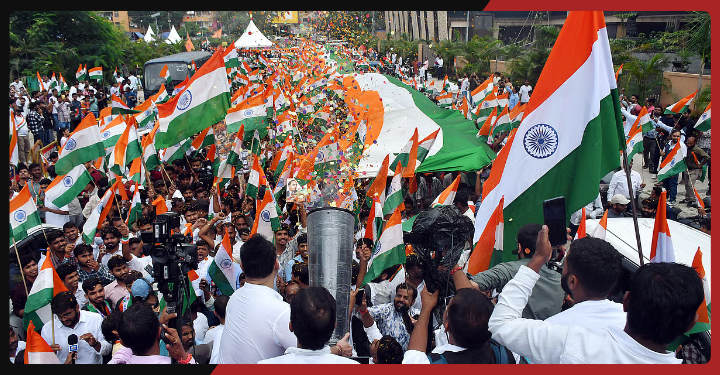
Jharkhand’s student agitation has grown from an examination-related dispute into a wider movement over transparency, accountability and employment opportunities. Thousands of students and job aspirants have participated in demonstrations in Ranchi, raising allegations of irregularities in recruitment examinations conducted by bodies such as the Jharkhand Public Service Commission and Jharkhand Staff Selection Commission.
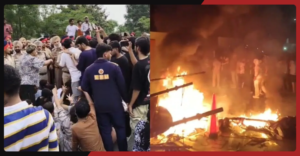
The latest escalation has come with the announcement of effigy-burning programmes targeting Chief Minister Hemant Soren and Congress leader Rahul Gandhi. Protesters have also announced that they intend to gherao the Chief Minister’s residence on August 20 if their demands remain unresolved. Reports indicate that the effigy-burning programme is planned across all 24 districts of the state.
To understand why the agitation has become so intense, it is necessary to look at the importance of competitive examinations for young people in Jharkhand. Government recruitment is viewed by many aspirants as one of the most secure career opportunities available to them. Candidates often spend years preparing, purchasing study materials, joining coaching programmes and sacrificing other career options.
Consequently, any allegation of irregularity can create deep frustration. Students argue that recruitment examinations must operate on principles of fairness because candidates have little control over the system once they enter the examination process.
The current agitation has included demands linked to the 14th JPSC examination, reforms in recruitment bodies and investigations into alleged irregularities. Earlier reports showed students carrying placards demanding cancellation of the examination and an investigation by the Central Bureau of Investigation.
The government has taken some steps. Chief Minister Hemant Soren announced in the Assembly that the 14th JPSC civil services examination would be cancelled. He also indicated that two other JPSC examinations would be scrapped and that an investigation would examine examinations conducted by TDPL.
Yet the movement has not ended.
That is an important political signal. It suggests that at least some protesters believe the dispute goes beyond the cancellation of an individual examination. Their broader concerns involve the functioning of recruitment institutions and the credibility of examination procedures.
The Chief Minister has also attempted to reassure students. Soren has said that the government would work toward comprehensive reforms and greater transparency in recruitment examinations.
However, protesters are demanding action that they consider concrete rather than merely assurances. The difference between government promises and student expectations has become one of the main reasons the agitation continues.
The political dimension has also expanded. Since the Hemant Soren government is the authority responsible for the state’s administrative system, students have increasingly directed their anger at the political leadership. The proposed effigy burning and residence gherao reflect that shift.
The involvement of Rahul Gandhi in the protesters’ announced effigy-burning programme adds another political layer. Congress is part of the ruling alliance in Jharkhand, making its leadership a target for protesters who want the coalition government to take responsibility for the recruitment controversy.
At the same time, the student movement has attracted political interest from opposition parties. BJP representatives have also raised allegations concerning recruitment examinations and demanded investigations. This creates a delicate situation because students may want to keep their movement focused on recruitment issues while political parties attempt to use the controversy to attack the government.
The August 20 programme could therefore become an important test of the movement’s strength and organisation.
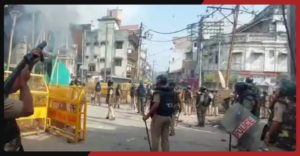
For the administration, the immediate concern will be maintaining peace and protecting sensitive government areas. Previous demonstrations have already resulted in clashes between police and protesters. On August 10, police used tear gas, batons and water cannon during a confrontation as protesters marched toward the state legislature.
The government must therefore demonstrate that it can address genuine student concerns without allowing violence or disruption to escalate.
For the students, the challenge is equally significant. A large protest can attract national attention, but maintaining public support depends heavily on keeping demonstrations peaceful and clearly communicating specific demands.
Ultimately, the Jharkhand recruitment controversy is about more than examinations. It has become a debate about trust between young citizens and the institutions responsible for giving them access to government employment.
The proposed August 20 gherao will show whether the government and protesters can find common ground before tensions rise again. If a credible mechanism for examination reform and investigation emerges, the confrontation could become an opportunity for dialogue. If not, the student movement could enter an even more intense phase.
Journalist Details