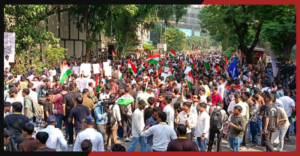
The Karnataka Congress government is facing one of its biggest internal challenges since assuming office, as a recent Cabinet reshuffle has triggered resentment among party legislators. What was intended to strengthen the government has instead ignited a political storm, with two Congress MLAs resigning in protest and several others reportedly expressing dissatisfaction over the allocation of ministerial positions. The developments have raised concerns about party unity and the stability of the government at a crucial time.
The Cabinet rejig followed weeks of discussions within the Congress leadership. The exercise was aimed at improving governance, ensuring regional representation, and rewarding experienced lawmakers. However, the final list of ministers disappointed several legislators who believed they deserved Cabinet berths after contributing significantly to the party’s electoral success. Their exclusion has become the focal point of growing unrest within the ruling party.
The resignation of the two MLAs has brought the internal conflict into the public spotlight. In their statements, the legislators alleged that the leadership had failed to recognize their service and had ignored the sentiments of party workers in their constituencies. They maintained that the Cabinet reshuffle lacked transparency and fairness, arguing that deserving leaders had been overlooked while others received preference.
The resignations have also fueled speculation that more lawmakers could follow the same path if the party leadership fails to address their concerns. Reports suggest that several Congress MLAs have held informal meetings to discuss the situation, though many have refrained from making public statements. Political observers believe that while not every dissatisfied legislator may resign, continued frustration could weaken the party’s internal cohesion.
Chief Minister Siddaramaiah has sought to reassure party members by emphasizing that Cabinet formation is always a difficult exercise due to constitutional limits on the number of ministers. He urged legislators to place the interests of Karnataka above individual ambitions and assured them that the leadership values every elected representative. Deputy Chief Minister D.K. Shivakumar also appealed for calm, expressing confidence that dialogue would resolve the differences.
The Congress high command has reportedly stepped in to contain the crisis. Senior leaders from the national leadership are believed to be monitoring the situation closely and have initiated discussions with disgruntled legislators. Party officials have maintained that the Cabinet reshuffle was based on multiple considerations, including regional balance, social representation, governance requirements, and administrative experience rather than personal preferences.
Despite these assurances, dissatisfaction continues to simmer. Some legislators have argued that the selection process lacked consultation and transparency. Others have pointed out that long-serving party workers expected recognition after helping Congress return to power in Karnataka. The perception of unequal treatment has become a sensitive issue that the leadership must address carefully to prevent further divisions.
The opposition Bharatiya Janata Party (BJP) has criticized the Congress government, describing the resignations as evidence of poor internal management. BJP leaders have alleged that the ruling party is preoccupied with resolving internal disputes instead of focusing on governance and development. They argue that political instability could affect the implementation of welfare schemes and slow administrative decision-making across the state.
Political analysts believe the Cabinet controversy highlights a broader challenge faced by parties with overwhelming legislative majorities. While electoral victories create opportunities for governance, they also generate high expectations among legislators seeking ministerial positions. Since only a limited number of Cabinet posts are available under constitutional provisions, balancing competing aspirations often becomes a difficult task.
For the Congress government, maintaining unity is particularly important as Karnataka remains one of the party’s most significant states. Any prolonged internal conflict could affect public perception and provide political ammunition to opposition parties ahead of future elections. Analysts note that resolving the dispute quickly through communication and organizational adjustments will be essential for preserving the government’s credibility.
Beyond the political drama, governance remains the priority for citizens. Karnataka continues to face challenges related to infrastructure, employment, agriculture, urban development, and economic growth. Many voters expect the government to focus on delivering its promises rather than becoming entangled in internal political disputes.
As negotiations continue behind closed doors, the coming days are expected to determine whether the Congress leadership can restore unity within its ranks. If successful, the Cabinet reshuffle controversy may gradually fade. However, if dissatisfaction continues to grow and additional resignations occur, the government could face a more serious political crisis. For now, the Karnataka Cabinet rejig has become a critical test of the Congress party’s ability to manage internal differences while maintaining stability and public confidence.
Journalist Details