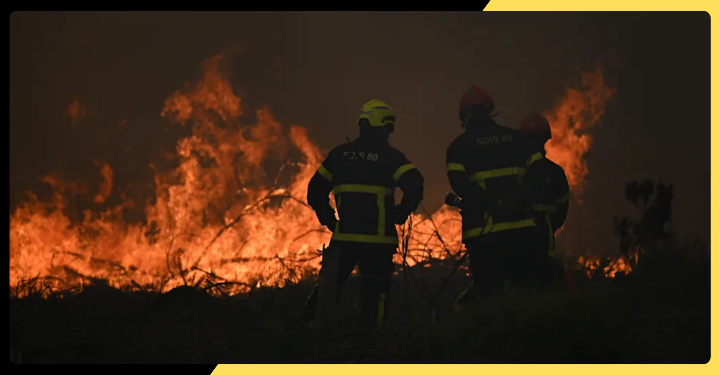
The wildfire crisis in southwest France has now grown into a major humanitarian emergency. Around 220,000 people have been forced to leave their homes in the main fire zone, including 55,000 people evacuated in the latest overnight operation.
The massive fire is spreading through the Gironde region as extreme heat, dry vegetation and strong winds create dangerous conditions. The flames have moved closer to the Bordeaux area, forcing authorities to evacuate additional communities.
The crisis has created a huge challenge for emergency services. Evacuating tens of thousands of people requires careful coordination between police, firefighters, local governments, transport authorities and medical services.
Many residents have had to leave their homes quickly. Some have taken only essential belongings, while others have been forced to search for temporary accommodation with family, friends or emergency shelters.
The emotional impact has also been severe. People who have lived in the affected communities for years are now uncertain about whether their homes and businesses will survive. Tourists have also been forced to abandon their holidays as the fire spreads through popular areas.
Firefighters are facing a dangerous battle. The flames are moving through dry forest areas, and strong winds can rapidly change the direction of the fire. Fire whirlwinds add another unpredictable element to the emergency.
These rotating columns of fire can create powerful local winds and carry burning embers across large distances. They can also make it difficult for firefighters to safely approach the fire.
France has mobilised a large response. Thousands of firefighters are working on the ground, supported by aircraft and military personnel. Emergency authorities are also preparing medical services and shelters for people affected by smoke and evacuation.
Smoke pollution has become a major public health concern. People living near the fire are being advised to stay indoors when possible and avoid exposure to thick smoke. Vulnerable groups are at greater risk from poor air quality.
The emergency is also affecting infrastructure. Roads and transport routes have been disrupted, while some areas have been closed to the public to allow emergency vehicles to operate.
The crisis is unfolding during a summer of extreme weather across Europe. France and Spain are both facing serious wildfire emergencies, demonstrating how quickly extreme heat can create a regional disaster.
Climate scientists have warned that rising temperatures and prolonged drought can increase wildfire risk. Dry vegetation acts as fuel, while heatwaves and strong winds allow fires to grow rapidly.
For authorities, the immediate challenge is to protect lives and prevent the fire from reaching more populated areas. But the longer-term challenge is preparing communities for future wildfire seasons that may become increasingly dangerous.
The current emergency has shown that evacuation plans must be capable of moving huge numbers of people quickly. Emergency shelters, roads, communications and firefighting resources all need to be ready before disaster strikes.
As firefighters continue their efforts, residents are being told to remain alert and follow official instructions. The situation can change rapidly, especially when winds strengthen.
The tragedy unfolding in France is not only about flames and forests. It is about families leaving homes, communities being disrupted and emergency workers risking their lives to protect others.
The battle continues, but the scale of the evacuation has already made this one of the most significant wildfire emergencies France has faced in recent years.
Journalist Details