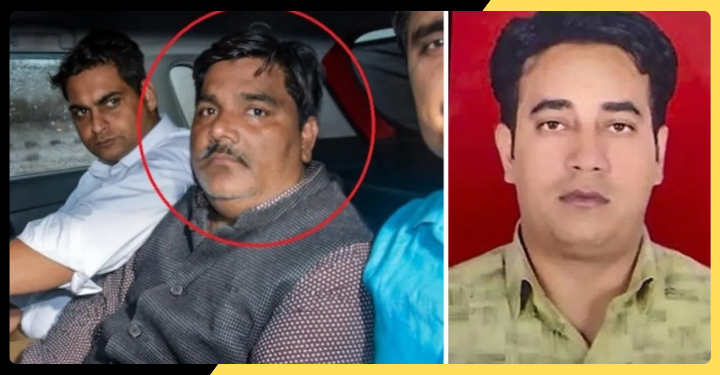
A Delhi court has sentenced former Aam Aadmi Party (AAP) councillor Tahir Hussain to life imprisonment for the murder of Intelligence Bureau (IB) officer Ankit Sharma during the communal violence that rocked northeast Delhi in February 2020. The judgment is considered one of the most significant legal outcomes arising from the riots, which claimed over 50 lives and left hundreds injured. Calling the killing an act of “savagery,” the court observed that the crime reflected exceptional brutality and warranted severe punishment under the law.
The verdict follows years of investigation, courtroom proceedings, witness testimonies, and legal arguments. Hussain was convicted on charges including murder, criminal conspiracy, rioting, unlawful assembly, and destruction of evidence. According to the prosecution, he played a key role in organizing and supporting the violent mob responsible for the attack that led to Sharma’s death. The court concluded that the prosecution had successfully proved its case beyond reasonable doubt.
Ankit Sharma, a 26-year-old Intelligence Bureau officer, went missing on February 25, 2020, while returning home during the height of the riots. His family launched an immediate search after they lost contact with him. The following day, his body was recovered from a drain near Chand Bagh in northeast Delhi. The discovery shocked the nation, particularly after the post-mortem examination revealed numerous stab wounds and multiple blunt-force injuries. Medical experts concluded that Sharma had suffered a brutal assault before his death.
Investigators alleged that Tahir Hussain’s residence served as an operational base for individuals involved in the violence. During the investigation, police claimed they recovered evidence suggesting that stones, petrol bombs, and other weapons had been stored on the premises before being used during the riots. CCTV footage, forensic reports, call records, digital evidence, and eyewitness accounts were presented in court to support the prosecution’s claims.
The prosecution argued that Hussain was not merely present during the violence but actively participated in a criminal conspiracy. According to prosecutors, he encouraged members of the mob and facilitated attacks targeting people in the area. They maintained that Sharma became one of the victims of the mob violence allegedly linked to the conspiracy.
The defence strongly denied all allegations against Hussain. His lawyers argued that he had been falsely implicated due to political considerations and insisted that there was no direct evidence proving that he personally attacked or murdered Ankit Sharma. The defence further stated that Hussain had contacted the police during the riots, seeking protection for himself and his family as the violence escalated around his residence. They questioned the credibility of several witnesses and challenged the interpretation of the evidence presented by investigators.
Despite these arguments, the court ruled that the prosecution had established Hussain’s involvement through a combination of direct and circumstantial evidence. While announcing the sentence, the judge remarked that the murder was exceptionally cruel and had deeply disturbed society. However, after considering legal principles governing sentencing, the court awarded life imprisonment instead of the death penalty.
The judgment was welcomed by Ankit Sharma’s family, who described it as a long-awaited step toward justice. Family members said they had endured years of emotional pain while pursuing the legal battle and expressed hope that the verdict would reinforce public faith in India’s judicial system. They also thanked the investigators and prosecutors for pursuing the case through an extensive trial.
The February 2020 Delhi riots remain among the most serious episodes of communal violence in the national capital in recent decades. The clashes erupted amid tensions over the Citizenship Amendment Act (CAA) and quickly spread across several neighbourhoods in northeast Delhi. The violence resulted in widespread destruction of homes, shops, vehicles, and places of worship, while more than 50 people lost their lives and hundreds sustained injuries.
The investigation into the riots involved numerous criminal cases against several accused individuals. Police agencies examined thousands of pages of evidence, including video footage, mobile phone data, forensic material, and witness statements. Many cases continue to be heard in courts, making the legal process one of the largest investigations related to communal violence in recent Indian history.
Legal experts believe the conviction of a former elected representative demonstrates that public office does not provide immunity from criminal prosecution. At the same time, they point out that the Indian legal system guarantees every convicted individual the right to appeal. Hussain is expected to challenge both his conviction and life sentence before a higher court, where the evidence and legal findings may undergo further judicial scrutiny.
The case has generated considerable political debate over the years, with different parties offering contrasting interpretations of the events surrounding the Delhi riots. Nevertheless, the court’s decision focuses specifically on the evidence presented during the trial and the legal responsibility established through judicial proceedings.
For many observers, the verdict represents an important chapter in the broader effort to secure accountability for crimes committed during the 2020 Delhi riots. While appeals may continue in higher courts, the judgment underscores the principle that those found guilty of serious offences can be held accountable through due process of law.
As the legal proceedings move to the appellate stage, the conviction of Tahir Hussain is likely to remain one of the most closely examined outcomes connected to the Delhi riots. For the family of Ankit Sharma, the decision provides a measure of closure after years of uncertainty and grief. For the justice system, it reflects the continued pursuit of accountability in one of India’s most significant communal violence cases in recent years.
Journalist Details