Morocco plays a central role in managing migration flows toward Spain because of its geographical position between sub-Saharan Africa and Europe. Located just across the Strait of Gibraltar from Spain and sharing borders with the Spanish enclaves of Ceuta and Melilla, Morocco has become one of the main transit countries for migrants hoping to enter the European Union. The country’s cooperation with Spain has become a key part of Europe’s broader strategy to control irregular migration.
For many migrants from African countries, Morocco is the final stop before attempting to reach Europe. Some arrive after long journeys through countries such as Mali, Niger, Algeria, and Libya, while others travel directly through West Africa. Once in Morocco, many migrants wait in cities near the northern coast, including areas close to Ceuta and Melilla, hoping for an opportunity to cross into Spanish territory.
Because of this position, Morocco faces significant pressure from both European governments and humanitarian organizations. Spain and other European Union countries view Morocco as an important partner in preventing unauthorized crossings. At the same time, human rights groups argue that migrants in Morocco must be treated fairly and that border enforcement should respect international humanitarian standards.
Over the years, Morocco has increased its border security operations. The country has deployed additional security forces, expanded surveillance systems, and strengthened controls around areas near Ceuta and Melilla. Moroccan authorities regularly conduct operations aimed at preventing large groups of migrants from reaching the border fences.
Spanish officials have often praised Morocco’s cooperation, describing it as essential for managing migration challenges. Since Ceuta and Melilla are European Union territories, Spain considers cooperation with Morocco a crucial part of protecting the EU’s external borders. Spanish authorities argue that preventing dangerous crossings before migrants reach the border can save lives and reduce the influence of human trafficking networks.
However, Morocco’s role has also generated controversy. Human rights organizations have criticized some migration control operations, claiming that migrants have sometimes faced harsh treatment during attempts to prevent crossings. Reports from advocacy groups have raised concerns about migrant relocations, access to asylum procedures, and the treatment of people attempting to reach Europe.
The issue of migration has also been connected to diplomatic relations between Spain and Morocco. Cooperation between the two countries has not always been consistent. Political disagreements, including disputes over Western Sahara and other regional issues, have occasionally affected relations. During periods of diplomatic tension, migration pressure at the Spanish border has sometimes increased, highlighting how closely migration management is linked to international politics.
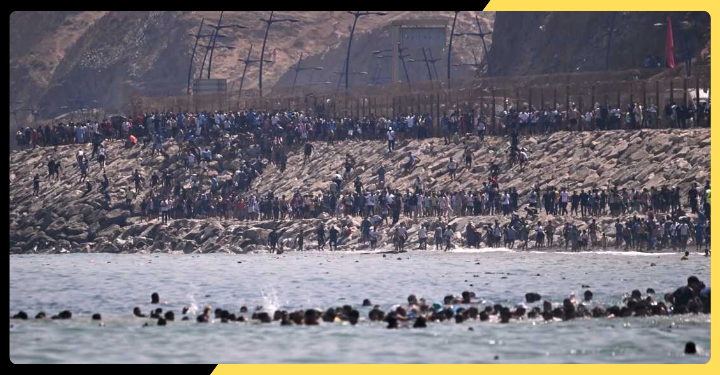
One of the most notable examples occurred when thousands of migrants reached Ceuta in a short period during a diplomatic dispute between Spain and Morocco. The sudden increase in arrivals demonstrated how quickly migration situations can change and how dependent Spain is on cooperation with Moroccan authorities.
Morocco has also attempted to position itself not only as a transit country but increasingly as a country of destination. In recent years, some migrants who originally planned to travel to Europe have remained in Morocco due to difficulties crossing the border. The Moroccan government has introduced policies aimed at integrating some foreign migrants, although challenges remain regarding employment, housing, and social acceptance.
European financial support has played a role in Morocco’s migration management efforts. The European Union has provided funding and assistance for border security, anti-smuggling operations, and programs designed to address migration challenges. Supporters argue that cooperation helps prevent dangerous journeys and strengthens regional stability. Critics, however, say European countries must ensure that funding does not only focus on stopping migration but also supports humanitarian protection and legal pathways.
The relationship between Morocco and Spain demonstrates the complexity of modern migration management. Morocco is simultaneously a neighbor, a security partner, a transit country, and a place where migrants may become stranded while trying to reach Europe. Its role goes beyond simply guarding a border; it involves balancing international partnerships, domestic concerns, and humanitarian responsibilities.
The deaths during the attempted Ceuta border crossing highlighted the difficulties facing Morocco and Spain. While both countries seek to prevent dangerous and irregular crossings, the continued movement of migrants shows that border enforcement alone cannot solve the deeper causes of migration.
Long-term solutions will require cooperation beyond security measures. Addressing poverty, conflict, unemployment, and instability in migrants’ countries of origin will be essential. Without tackling these root causes, Morocco and Spain are likely to continue facing pressure at one of the world’s most sensitive migration borders.
Journalist Details