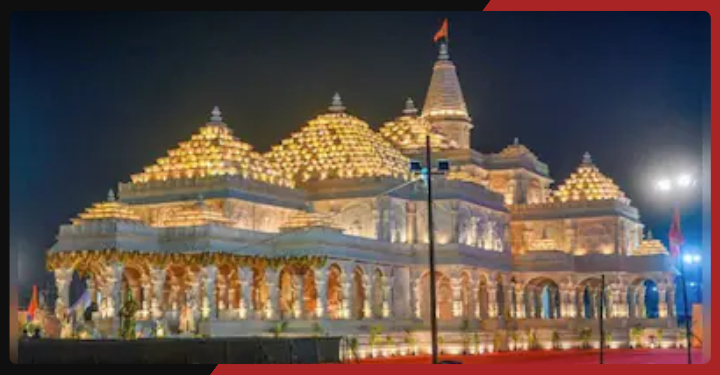
The recruitment process for the CEO of the Ram Mandir in Ayodhya has generated attention not only because of the importance of the position but also because of the nature of questions reportedly being asked during interviews. Candidates have faced questions concerning their faith in Lord Ram, janeu, vegetarian food, alcohol consumption and familiarity with Hindu customs.
The questions are particularly noteworthy because the CEO position involves the management of a major religious institution. The Shri Ram Janmbhoomi Teerth Kshetra is responsible for the administration of the temple, and the CEO will have to deal with the enormous logistical demands associated with pilgrims, religious ceremonies, infrastructure and daily operations.
The recruitment exercise attracted thousands of applicants. Reports say around 5,200 applications were received before the selection committee shortlisted 18 candidates for interviews. The first day saw eight candidates appear before the panel.
The shortlisted group includes experienced people from government and the armed forces. Three former IAS officers, one former IPS officer and four former military officers were among those interviewed on the first day. Such backgrounds indicate that the committee is looking for candidates with substantial experience in managing large systems and handling complex responsibilities.
However, the reported personal questions have become the headline feature of the interview. Candidates were reportedly asked whether they believed in Lord Ram, whether they wore a janeu, whether they followed a vegetarian diet and whether they consumed alcohol. They were also asked about their familiarity with Hindu traditions and whether they would be comfortable dressing according to religious customs.
These questions can be understood in the context of the temple’s identity. Unlike a conventional corporate organization, the CEO of a major temple has to operate in an environment where religious traditions influence everyday functioning. Understanding the expectations of priests, devotees and religious authorities can be important for the person responsible for administration.
But the questions also create a debate about the distinction between personal faith and professional capability. A candidate may have excellent administrative experience without following every traditional practice. Similarly, dietary preferences or personal habits do not necessarily indicate whether a person can manage finances, staff, security or crowds effectively.
That is why the broader interview structure is important. Reports indicate that candidates were not questioned only about their personal lives. They were also asked about leadership, administrative experience, social and religious involvement, their understanding of the temple and their vision for its future.
The application process itself had reportedly sought information about education, employment, administrative experience and other professional qualifications. A separate assessment form reportedly contained 32 questions covering areas including qualifications, leadership, large-event management and the candidate’s vision for the temple trust.
This suggests that the selection committee is attempting to evaluate candidates through multiple dimensions. Religious understanding may be one component, while professional experience and strategic thinking form other important components.
The CEO’s responsibilities will be extensive. Ayodhya has emerged as a major pilgrimage destination following the opening of the Ram Mandir. The administration must handle large crowds while ensuring safety, cleanliness, efficient movement and smooth access to temple facilities.
Festival periods will present an even greater challenge. Large gatherings require coordination between temple authorities, local administration, police, medical teams, transport officials and other agencies. The CEO will need the ability to coordinate all these stakeholders without disrupting religious activities.
Technology will also be an important part of future temple management. Online services, digital donations, visitor information systems, crowd monitoring and communication platforms can help make the pilgrimage experience more efficient.
Financial transparency is another major responsibility. A religious institution receiving significant donations requires strong accounting systems and clear internal controls. The CEO must be capable of ensuring that administrative systems are professional and accountable.
The interview committee is expected to recommend three names to the temple trust. The trust will then make the final appointment.
The selection therefore represents a test of how a modern religious institution approaches executive recruitment. The central question is whether the ideal CEO should primarily be a professional administrator who understands the religious environment, a person deeply rooted in religious traditions who also possesses management skills, or a combination of both.
The reported interview questions have brought this issue into public discussion. While religious compatibility may matter to the institution, the successful candidate will ultimately have to demonstrate the ability to manage a complex organization.
For the Ram Mandir, the appointment is particularly significant because the institution’s scale and public importance are increasing rapidly. The next CEO will not simply manage an office. The person will be responsible for helping build systems capable of serving millions of devotees while preserving the sanctity and traditions associated with the temple.
That makes the final decision closely watched. The appointment will reveal what qualities the temple trust believes are most important for leading one of India’s most significant religious institutions in the years ahead.
Journalist Details