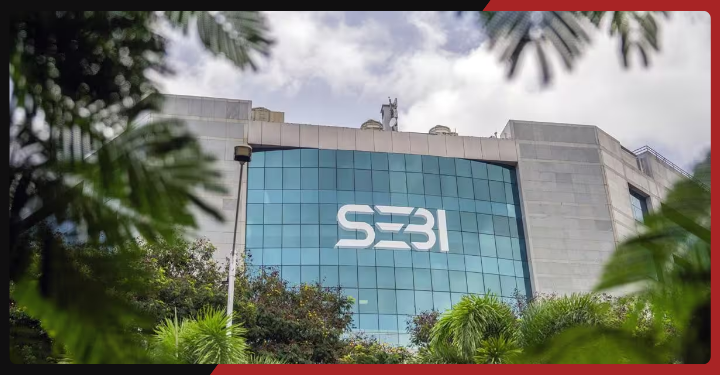
India’s capital markets regulator, the Securities and Exchange Board of India (SEBI), has proposed a series of changes to the Closing Auction Session (CAS) and the way settlement prices are determined for derivatives contracts. The proposals come after market participants raised concerns over volatility and price distortions following the introduction of CAS in the equity cash market on August 3, 2026.
The Closing Auction Session was introduced to improve the process of determining the final price of stocks at the end of the trading day. Instead of relying only on the volume-weighted average price of trades during the final 30 minutes of continuous trading, CAS brings together buying and selling interest during an auction period to discover a closing price.
SEBI had introduced the mechanism with the objective of making closing-price discovery more transparent and efficient. Closing prices are important because they are used for several purposes, including derivatives settlement, index calculations and valuation-related activities. The regulator had argued that an auction-based system could provide a more representative closing price by concentrating liquidity at the end of the trading session.
However, the first weeks of the new system generated concerns, particularly around expiry days. Derivatives contracts continued to trade beyond the cash-market auction, creating a gap between the cash-market closing price and the derivatives market. This difference became especially important on expiry days, when even small changes in the underlying price can have a significant impact on futures and options positions.
Market participants also expressed concerns about sudden price movements during the auction period. Reports indicated that some stocks and benchmark indices experienced sharp fluctuations around the closing auction, raising questions about the interaction between the new cash-market closing mechanism and derivatives settlement.
SEBI has now proposed alternatives to address these concerns. One proposal would use a blended volume-weighted average price that combines information from the final 30 minutes of continuous trading with the Closing Auction Session. Another option would temporarily return derivatives settlement to a methodology based only on continuous trading data, effectively separating expiry settlement from CAS for a period.
The regulator is also examining changes to market timings and the operation of the closing auction. Among the proposals are shortening the post-closing auction period and changing the information displayed to traders during CAS.
SEBI has suggested that the indicative index closing value should no longer be displayed during the auction because it could potentially be misunderstood by market participants. At the same time, indicative equilibrium prices for individual stocks could continue to be displayed.
Another proposal concerns limit orders placed significantly away from the reference price. SEBI is considering restrictions on the cancellation of limit orders that are more than 1% away from the reference price. The objective is to reduce the possibility of unusual order activity influencing price discovery during the closing process.
The regulator’s proposals do not represent a complete withdrawal of CAS. Instead, SEBI appears to be looking at ways to refine the mechanism while addressing problems that became visible after implementation.
The consultation process is now important for brokers, exchanges, institutional investors, proprietary traders and retail market participants. SEBI has invited public comments on the proposals until October 3.
The final framework will determine how India’s stock and derivatives markets operate during one of the most sensitive periods of the trading day. The regulator’s challenge will be to maintain the advantages of transparent closing-price discovery without creating unnecessary volatility or uncertainty for derivatives traders.
The review also demonstrates how market regulations can evolve after implementation. CAS was introduced after extensive consultation, but its practical impact has provided new information for regulators and market participants. SEBI’s latest proposals are aimed at using that experience to create a more stable and predictable market structure.
Journalist Details